I was in the middle of a frantic dinner rush, the kitchen smelling like burnt toast and over‑cooked noodles, when my friend texted me, “You’ve got to try these spring rolls I found online—so fresh, so crisp.” I laughed, rolled my eyes, and replied, “If it’s going to survive the chaos of my stove, it better be a game‑changer.” That text became the spark that set me on a mission: to create a spring roll that would outshine every recipe I’d ever seen, that would make the kitchen sing and the taste buds dance, and that would be so simple you could make it while juggling a phone call and a toddler’s tantrum. The moment I cracked open a fresh batch of rice paper wrappers, the air filled with a faint, earthy aroma that made me think of distant tropical jungles and the promise of adventure.
Picture the scene: a bright, airy kitchen, the sun slanting through the window, a bowl of thinly sliced carrots that crunch like a fresh snowflake, cucumbers that glisten with dewy freshness, and a splash of lime juice that cuts through the air with citrus fire. The sound of the rice paper soaking in warm water is a gentle hiss, almost like a secret whisper. The texture of each wrapper, silky and translucent, feels like a promise of something delicious. And as I lay out the ingredients, I can’t help but imagine the first bite—cool, crisp, and coated in a nutty, sweet‑salty sauce that melts on the tongue like a velvety dream. The anticipation is palpable, and I can almost taste the satisfaction of a perfect roll, each bite a miniature celebration.
Why does this version stand out? Because it’s a symphony of flavors that dance together, not a cacophony of mismatched tastes. The peanut sauce isn’t just a dip; it’s a silky, creamy hug that binds the crisp veggies and the buttery avocado into one harmonious bite. The fresh herbs—mint and cilantro—add a bright, almost floral note that lifts the entire dish. The rice paper wrappers, when soaked just right, become a delicate, almost translucent canvas that showcases the vibrant colors of the vegetables. And the best part? It’s all done in under fifteen minutes, so even the busiest of us can bring this fresh, healthy, and utterly irresistible dish to the table with ease.
I dare you to taste this and not go back for seconds. Picture yourself pulling a roll out of the water, the wrapper glistening, the fillings bursting with color, and the first bite sending a wave of crisp freshness across your palate. This is hands down the best version you’ll ever make at home. If you’ve ever struggled with spring rolls that come out soggy or flavorless, you’re not alone—and I’ve got the fix. Most recipes get this completely wrong by over‑soaking the wrappers or using a sauce that’s too thick. Here’s what actually works: the right water temperature, the correct balance of sweet and savory in the sauce, and a quick, efficient rolling technique that keeps the fillings snug and the wrappers intact. Stay with me here—this is worth it.
What Makes This Version Stand Out
- Flavor: The peanut sauce is the star—rich, nutty, and balanced with a splash of lime that cuts through the richness, leaving a clean finish that invites you to roll after roll.
- Texture: Every bite delivers a satisfying crunch from the carrots and cucumber, a creamy mouthfeel from the avocado, and a silky coating from the sauce, all wrapped in a paper that’s firm yet tender.
- Freshness: Fresh mint and cilantro aren’t just garnish; they’re essential, providing a burst of herbal brightness that elevates the dish beyond the ordinary.
- Speed: The entire process takes less than twenty minutes, making it the perfect quick‑fire appetizer for a busy weeknight or a last‑minute party.
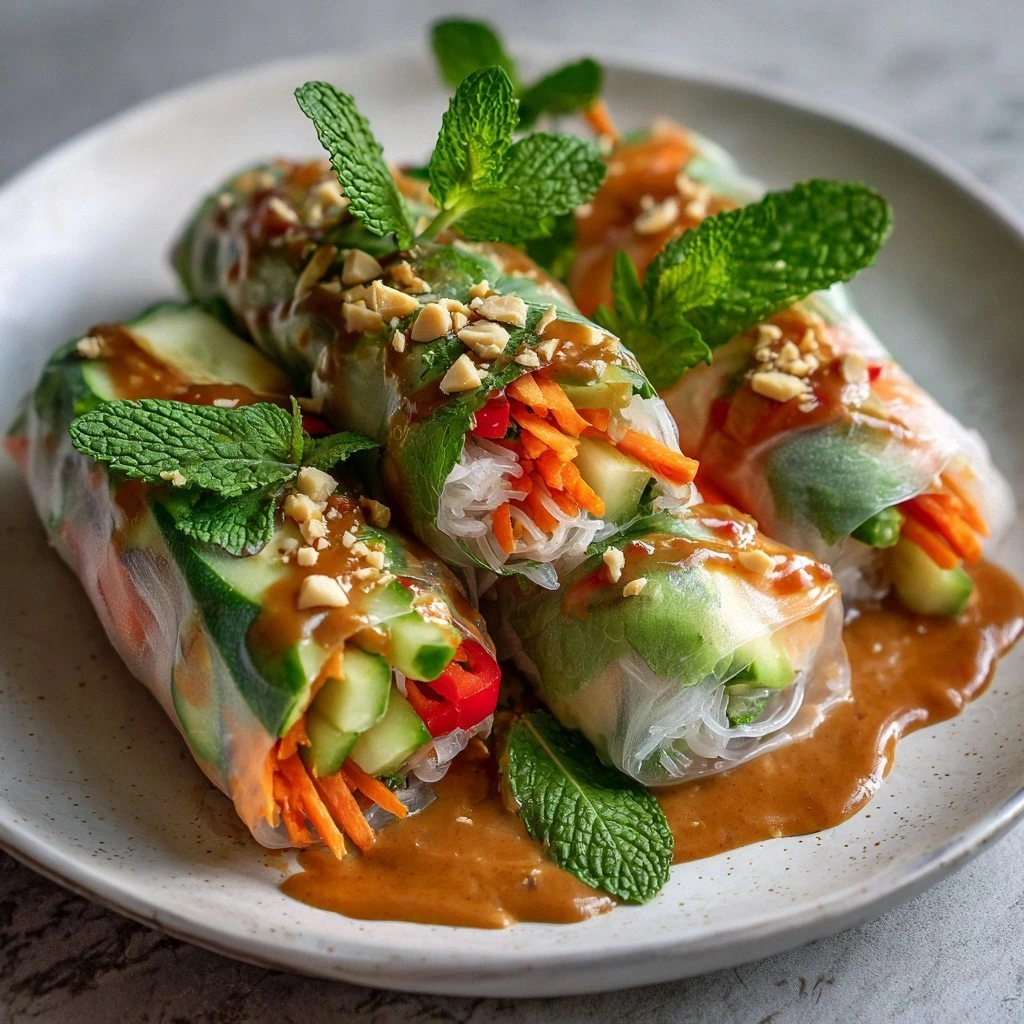
- Visual Appeal: The vibrant orange carrots, crisp green cucumber, ruby red bell pepper, and creamy avocado create a rainbow that’s almost too pretty to eat.
- Nutrition: Packed with healthy fats from avocado and peanut butter, fiber from fresh veggies, and low in carbs thanks to rice paper, it’s a guilt‑free indulgence.
- Make‑Ahead: The rolls keep their crispness for up to a day when stored properly, making them a reliable go‑to for pre‑party prep.
- Versatility: Swap in protein like tofu or shrimp, or adjust the sauce to a spicy sriracha version for a kick, and the core experience remains delicious.
Alright, let’s break down exactly what goes into this masterpiece. And before we dive into the ingredients, here’s a quick kitchen hack that will elevate your rolling game.
Inside the Ingredient List
The Flavor Base
Peanut butter is the heart of this sauce. It provides a creamy, nutty foundation that’s both rich and comforting. A smooth, natural peanut butter ensures that the sauce has a velvety texture, while a bit of salt from soy sauce brings out the depth of flavor. If you’re watching sodium, you can reduce the soy sauce to one tablespoon or use a low‑sodium version. Skipping peanut butter entirely would leave the sauce thin and less satisfying—think of it as the missing glue that holds everything together.
The Texture Crew
Carrots, cucumber, and red bell pepper form the crunchy backbone of the roll. The carrots, julienned into fine sticks, add a natural sweetness that balances the savory sauce. Cucumbers, sliced thinly, bring a refreshing bite that cuts through the richness of the avocado. The bell pepper’s sweet juiciness adds a pop of color and a subtle crunch. Together, these vegetables create a layered texture that’s both satisfying and visually appealing. If you’re looking for a softer bite, replace the bell pepper with ripe mango or sliced strawberries for a fruity twist.
The Unexpected Star
Avocado is the creamy, buttery element that elevates the roll from ordinary to extraordinary. It balances the crisp vegetables with a smooth, luscious mouthfeel and adds healthy fats that keep you feeling full. Avocado also lends a subtle green hue that contrasts beautifully with the bright reds and oranges. If you’re allergic or simply don’t like avocado, a few spoonfuls of hummus or a light spread of Greek yogurt can mimic the creaminess, though the flavor profile will shift slightly.
The Final Flourish
Fresh mint and cilantro are the aromatic finish that lifts the entire dish. Mint provides a cool, almost menthol note that refreshes the palate, while cilantro adds a citrusy, slightly peppery brightness that is quintessentially Asian. These herbs are not merely decorative; they’re essential in cutting through the richness of the sauce and adding a layer of complexity. If you’re not a fan of cilantro’s distinct flavor, you can omit it or replace it with basil for a sweeter, sweeter finish. The key is to use fresh herbs, as dried ones lose their potency and can make the dish taste flat.
Everything’s prepped? Good. Let’s get into the real action. And remember, a few simple tweaks can turn a good roll into an unforgettable experience.
The Method — Step by Step
- Start by filling a large bowl with warm water (around 110°F). The water should be hot enough to soften the wrappers quickly but not so hot that it cooks them. Dip one wrapper into the water for about 10–12 seconds, or until it turns translucent and pliable. The key here is to keep the wrapper from drying out; if it’s too stiff, the roll will tear. Once softened, lay it on a clean, damp kitchen towel to keep it from sticking.
- While the wrappers soften, prepare the sauce. In a small bowl, whisk together peanut butter, soy sauce, lime juice, honey, and water until you get a smooth, pourable consistency. The water helps thin the peanut butter slightly, making it easier to coat the rolls. If the sauce is too thick, add a teaspoon of water at a time until it reaches the desired thickness. Taste the sauce; it should be sweet, slightly salty, and tangy—no single flavor should dominate.
- Lay the softened wrapper on a flat surface. Place a thin line of sauce in the middle, about 1–2 tablespoons, leaving space around the edges for folding. Then, add a handful of sliced carrots, cucumber, bell pepper, and a few slices of avocado. Sprinkle a few mint leaves and cilantro on top. The amount of filling depends on your preference, but keep it balanced so the wrapper doesn’t feel overstuffed.
- Fold the bottom edge of the wrapper over the filling, tucking it snugly. Then, fold in the sides, leaving a small gap at the top. Finally, roll the wrapper tightly from the bottom, ensuring the seam stays closed. The result should be a neat, cylindrical roll. If the seam is loose, press it gently with your fingers to seal it.
- Repeat steps 1–4 until all wrappers and fillings are used. Store the finished rolls in a shallow dish lined with parchment paper, covering them with a damp cloth to keep them from drying out. If you’re preparing them ahead of time, wrap them individually in plastic wrap and refrigerate for up to 24 hours.
- When ready to serve, give the rolls a quick rinse in a bowl of cold water to remove any residual sauce on the wrapper. Pat them dry gently with a paper towel. The final touch? Drizzle a little extra sauce on top for an extra burst of flavor. The sauce should coat the roll like velvet, giving it a glossy, appetizing finish.
- Serve immediately with a side of extra peanut sauce for dipping. The combination of crisp veggies, creamy avocado, and silky sauce creates a flavor explosion that’s impossible to resist. The rolls can also be paired with a light cucumber salad or a tangy pickled vegetable for a balanced meal.
- Enjoy the moment—watch the colors pop, feel the smoothness of the wrapper, and let the aroma of fresh herbs fill your kitchen. This is the moment of truth. Don’t walk away from the stove here; the final roll is your masterpiece, and you’ve earned every bite.
That’s it—you did it. But hold on, I’ve got a few more tricks that will take this to another level. These insider tips will help you perfect the roll, avoid common pitfalls, and impress your guests with a flawless presentation.
Insider Tricks for Flawless Results
The Temperature Rule Nobody Follows
The water temperature for soaking the wrappers is a critical yet often overlooked detail. If the water is too hot, the wrappers will cook and become brittle. If it’s too cool, they’ll stay stiff and tear. Aim for a gentle warmth—about 110°F (43°C). A quick way to test is to dip a wrapper and watch it turn translucent in about 10 seconds. If it takes longer, the water is too cold. If it softens too quickly, it’s too hot. This small adjustment can make the difference between a silky roll and a soggy mess.
Why Your Nose Knows Best
When mixing the peanut sauce, trust your nose. The aroma of peanut butter, lime, and soy sauce should mingle into a balanced perfume. If you notice a strong, overpowering peanut scent, add a splash of lime or a pinch of salt to cut it down. Conversely, if the sauce smells bland, a tiny bit more honey or a dash of chili flakes can revive it. Your nose is the ultimate judge of flavor harmony.
The 5-Minute Rest That Changes Everything
After rolling, let the spring rolls rest for five minutes before serving. This short rest allows the fillings to settle, the sauce to coat the wrapper evenly, and the wrapper to firm up slightly. The result is a roll that holds together better and delivers a consistent bite throughout. Think of it as a quick “cool‑down” period that ensures every bite is as perfect as the first.
The Secret to a Perfect Fold
When folding the wrapper, keep the seam flat and tight. A loose seam will open up during the first bite, releasing all the fillings and ruining the texture. Use a gentle, even pressure and a small amount of sauce to seal the seam. If you’re nervous about the seam, lightly press it with your fingers to ensure it’s sealed. A well‑sealed seam is the hallmark of a professional roll.
The Quick Dip Trick
If you’re in a hurry and don’t want to wait for the rolls to rest, dip each roll in a bowl of cold water for a minute before serving. This step removes excess sauce from the wrapper’s surface, giving the roll a cleaner look and a fresher taste. It also helps the roll maintain its shape, especially if you’re serving them on a platter.
Creative Twists and Variations
This recipe is a playground. Here are some of my favorite ways to switch things up:
Spicy Sriracha Crunch
Add a tablespoon of sriracha to the peanut sauce for heat, and sprinkle a pinch of crushed red pepper on top of the roll. This version is perfect for those who love a fiery kick and want to pair the rolls with a cool cucumber salad.
Mango Tango
Swap the avocado for ripe mango slices and add a drizzle of coconut milk to the sauce. The sweet, tropical flavor pairs wonderfully with the crunchy veggies and creates a dessert‑like roll that’s surprisingly satisfying.
Protein Power
Add grilled tofu cubes or shrimp to the filling for a protein boost. The tofu should be seasoned with a touch of soy sauce and a sprinkle of sesame seeds before rolling. This makes the rolls more filling and turns them into a complete meal.
Herb Garden
Replace the mint with basil and add a handful of fresh dill for a Mediterranean twist. The sauce remains the same, but the herbs shift the flavor profile to something fresh and slightly citrusy.
Gluten‑Free Twist
Use rice paper wrappers, which are naturally gluten‑free, and pair with a sauce made from almond butter instead of peanut butter. The almond butter gives a subtle, nutty flavor that pairs beautifully with the fresh veggies.
Asian Fusion
Add a splash of rice vinegar and a sprinkle of toasted sesame seeds to the sauce. This gives the rolls a tangy, nutty depth that complements the fresh herbs and bright vegetables.
Storing and Bringing It Back to Life
Fridge Storage
Store the rolls in an airtight container lined with parchment paper. Keep them in the refrigerator for up to 24 hours. The parchment paper prevents the wrappers from sticking together, while the airtight container keeps them fresh. When you’re ready to serve, let them sit at room temperature for 10 minutes to soften slightly.
Freezer Friendly
Freezing is a great option for meal prep. Wrap each roll individually in plastic wrap, then place them in a freezer bag. They’ll stay good for up to 3 months. To thaw, leave them in the refrigerator overnight or microwave on a low setting for 30 seconds.
Best Reheating Method
When reheating, use a steamer or microwave with a damp paper towel. Steam for 2 minutes or microwave for 45 seconds. Add a tiny splash of water before reheating to keep the wrappers moist and prevent them from drying out. The result is a roll that tastes almost as fresh as when it was first made.