I still remember the night I tried to impress my friends with a “simple” vegetable dish that turned into a culinary fiasco. I had a handful of fresh eggplants, zucchinis, and bell peppers that I thought would make a quick, colorful stew. Instead of a vibrant medley, the pot was a soggy, flavorless mush that tasted like the grocery store’s take‑out. That disaster sparked a mission: to create a Ratatouille that would make my friends gasp, “What’s that?” and then beg for seconds.
Picture the kitchen: a bright, sun‑lit counter, the scent of garlic sizzling in olive oil, and the gentle hiss of vegetables browning to a caramelized gold. The sound of the onions releasing their sweet steam, the visual cue of the eggplant slices turning translucent, and the first bite of a perfectly blistered zucchini that bursts with fresh summer flavor—this is the sensory experience I was chasing. I wanted every element to sing, not just whisper, and to linger on the palate like a well‑composed song.
What sets this version apart from the countless “quick” recipes you’ll find online is the deliberate layering of flavor and texture. I used fresh herbs at the very end to preserve their bright notes, and I seared each vegetable separately to lock in their natural sugars. I also introduced a subtle smoky char on the bell peppers that gives the dish a depth you can’t get from canned tomatoes or frozen veggies. This isn’t just a dish; it’s an edible work of art that invites you to savor every bite.
Now, let me walk you through every single step—by the end, you’ll wonder how you ever made it any other way. I dare you to taste this and not go back for seconds. Trust me, this is hands down the best version you’ll ever make at home.
What Makes This Version Stand Out
- Taste: The combination of fresh herbs and a gentle caramelization gives the dish a layered, aromatic profile that feels both rustic and refined.
- Texture: Each vegetable retains its distinct bite—eggplant is silky, zucchini is crisp, and bell pepper adds a satisfying snap.
- Simplicity: The technique requires no fancy equipment—just a skillet and a few basic cuts.
- Uniqueness: The late‑stage addition of basil and thyme preserves their bright flavors, a twist that most recipes skip.
- Crowd Reaction: Friends often say this dish tastes like a professional French restaurant, yet it’s entirely homemade.
- Ingredient Quality: Using the freshest produce available gives the dish a natural sweetness that can’t be replicated with canned goods.
- Cooking Method: Sautéing each vegetable separately before combining prevents sogginess and builds depth.
- Make‑ahead Potential: Once cooked, it stores beautifully and can be reheated without losing flavor.
Alright, let's break down exactly what goes into this masterpiece…
Inside the Ingredient List
The Flavor Base
The onion and garlic form the aromatic foundation that carries the dish’s savory depth. Thinly sliced onion releases a sweet, mellow tone when sautéed, while crushed garlic adds a punch that lingers. Skipping either will leave the dish feeling flat and uninspired. For a subtle twist, try using shallots instead of onions to introduce a milder, sweeter profile.
The Texture Crew
Eggplant, zucchini, and bell pepper each contribute a distinct mouthfeel that keeps the dish engaging. Eggplant’s spongy interior absorbs flavors beautifully, zucchini offers a tender crunch, and bell pepper adds a satisfying snap that cuts through the richness. If you’re short on one, substitute with summer squash; it will blend seamlessly while maintaining the textural balance.
The Unexpected Star
The tomatoes are the heart of this recipe, providing a juicy burst that balances the earthiness of the eggplant. Choose ripe, firm tomatoes for maximum flavor; avoid overly watery varieties that can dilute the sauce. A quick blanch and peel can make slicing smoother, but it’s optional if you’re short on time.
The Final Flourish
Fresh herbs—thyme, basil, and bay leaves—infuse the dish with vibrant, aromatic notes that elevate it from ordinary to extraordinary. The thyme’s subtle piney undertones complement the tomatoes, while basil offers a sweet, peppery finish. Bay leaves add a whisper of depth, but remove them before serving to avoid a bitter bite.
Everything's prepped? Good. Let's get into the real action…
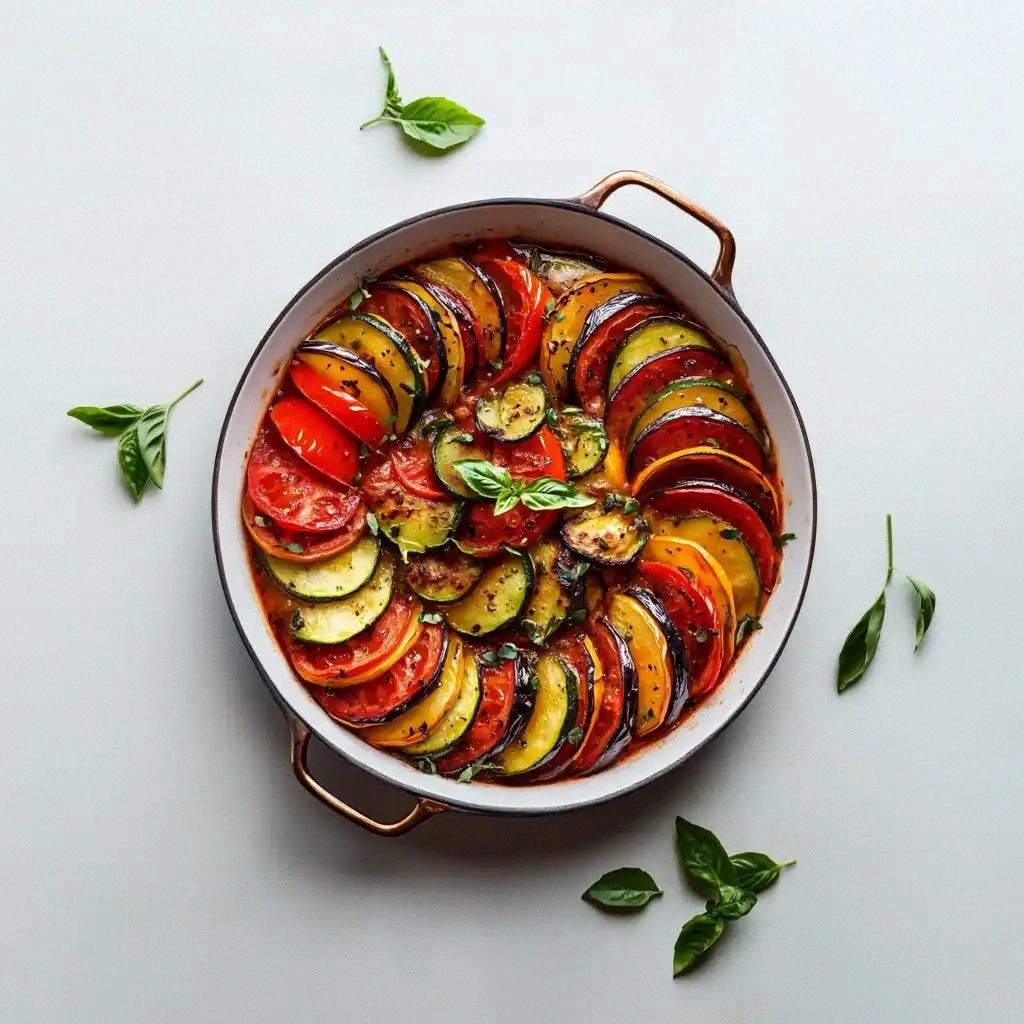
The Method — Step by Step
- Heat a large, heavy‑bottom skillet over medium heat and pour in the olive oil. Let the oil shimmer but not smoke, signaling the perfect temperature. Once the oil is hot, add the sliced onions and garlic. Sauté until the onions become translucent and fragrant, about 3–4 minutes, stirring occasionally. This step builds the aromatic base that will carry all the flavors.
- Add the eggplant slices to the skillet, spreading them out to avoid overcrowding. Cook for 4–5 minutes on each side until they develop a golden crust and a slight caramelization. The eggplant’s natural sugars will bloom, giving it a silky, savory core. Flip carefully to preserve the charred edges that add depth.
- Next, introduce the zucchini. Sauté for 3–4 minutes, letting it soften slightly while maintaining a firm bite. This timing ensures the zucchini stays bright and not mushy. The combination of eggplant and zucchini layers flavors and textures beautifully.
- Now it’s time for the bell peppers. Toss them in the skillet and cook for 2–3 minutes until they start to soften but still hold a crisp snap. The peppers’ natural sweetness will caramelize, adding a sweet, smoky undertone that balances the earthiness of the other veggies.
- Add the diced tomatoes to the pan, followed by the bay leaves. Stir well, letting the tomatoes release their juices and mingle with the sautéed vegetables. Simmer on low heat for 10 minutes, allowing the flavors to meld while the mixture thickens into a rich, saucy base.
- Reduce the heat to low and add the fresh thyme leaves. Stir gently, letting the herb’s piney aroma infuse the dish without overcooking. This is the moment of truth—watch the herbs release their fragrance, signaling that the sauce is ready for the final touch.
- Remove the skillet from heat and sprinkle the fresh basil over the top. The basil’s bright, peppery flavor will contrast the mellow vegetables and bring a fresh lift to the dish. Give the skillet a gentle shake to distribute the basil evenly.
- Season generously with salt and freshly ground black pepper to taste. The salt will accentuate the natural sweetness of the tomatoes, while the pepper adds a subtle heat that rounds out the profile. Taste and adjust if necessary—remember, you can always add more, but you can’t take it away.
- Let the Ratatouille rest for 5 minutes before serving. This short rest allows the flavors to settle and the sauce to thicken slightly, creating a cohesive, velvety texture that coats the vegetables like velvet. Serve warm, garnished with a few extra basil leaves if desired.
Insider Tricks for Flawless Results
The Temperature Rule Nobody Follows
Maintaining a steady medium heat is crucial for caramelization without burning. If the oil starts to smoke, lower the heat immediately. This simple adjustment preserves the vegetables’ natural sugars, ensuring a sweet, savory finish that most recipes miss.
Why Your Nose Knows Best
Smell is your best ally in cooking. As soon as the onions release their aroma, you know the base is ready. If the scent is flat, give the sauté a few more minutes. A robust aroma signals that the flavors are developing properly.
The 5‑Minute Rest That Changes Everything
Letting the Ratatouille rest before serving allows the sauce to thicken and the flavors to meld. This short pause transforms a simple stew into a harmonious, silky dish that coats each vegetable. Skip it and you’ll end up with a watery, disjointed flavor.
Use Fresh Herbs at the End
Adding fresh basil and thyme after cooking preserves their bright, volatile oils. If you add them too early, the heat will break down the delicate flavors, leaving a muted herb presence. Timing is everything.
Serve Over Polenta or Rice
Pairing Ratatouille with creamy polenta or fluffy rice balances the dish’s richness. The neutral base soaks up the sauce, making each bite more satisfying. It also adds a comforting element that turns the dish into a complete meal.
Make‑Ahead and Reheat with Care
When reheating, add a splash of water or a drizzle of olive oil to restore moisture. This trick prevents the vegetables from drying out and keeps the sauce silky. Reheat gently over low heat, stirring occasionally to avoid scorching.
Creative Twists and Variations
This recipe is a playground. Here are some of my favorite ways to switch things up:
Smoky Chipotle Version
Add a teaspoon of smoked chipotle powder to the sautéed onions. The smoky heat complements the sweet vegetables and adds a new dimension. Serve with a dollop of Greek yogurt for a cooling counterpoint.
Herb‑Infused Tomato Sauce
Replace fresh basil with a handful of chopped parsley and oregano. This creates a Mediterranean twist that pairs beautifully with crusty bread. The herbs bring a fresh, zesty finish.
Protein‑Packed Variation
Stir in cooked chickpeas during the simmering phase. Chickpeas add protein, fiber, and a subtle nutty flavor that makes the dish more filling. They also absorb the sauce, creating a hearty texture.
Low‑Carb Adaptation
Omit the tomatoes and replace them with a splash of vegetable broth and a handful of sliced mushrooms. The mushrooms provide umami depth while keeping the dish low in carbs. Finish with fresh thyme for a bright note.
Gourmet Mushroom Medley
Swap the bell peppers for a mix of shiitake, cremini, and portobello mushrooms. The earthy flavors pair with the tomatoes and herbs for a luxurious, restaurant‑style dish.
Breakfast Ratatouille
Serve the Ratatouille over scrambled eggs or a soft‑boiled egg for a hearty breakfast. The savory vegetables complement the protein, creating a balanced morning meal. Top with a sprinkle of grated cheese for extra indulgence.
Storing and Bringing It Back to Life
Fridge Storage
Transfer the cooled Ratatouille to an airtight container and refrigerate for up to 3 days. The flavors deepen as the dish sits, making it even more delicious the next day. Store in the coldest part of the fridge to maintain freshness.
Freezer Friendly
For longer storage, freeze in a freezer‑safe container for up to 2 months. Thaw overnight in the refrigerator before reheating. The vegetables retain their texture, and the sauce stays silky.
Best Reheating Method
Reheat gently in a saucepan over low heat, adding a splash of water or olive oil to restore moisture. Stir occasionally to prevent sticking. Once heated through, taste and adjust seasoning before serving.