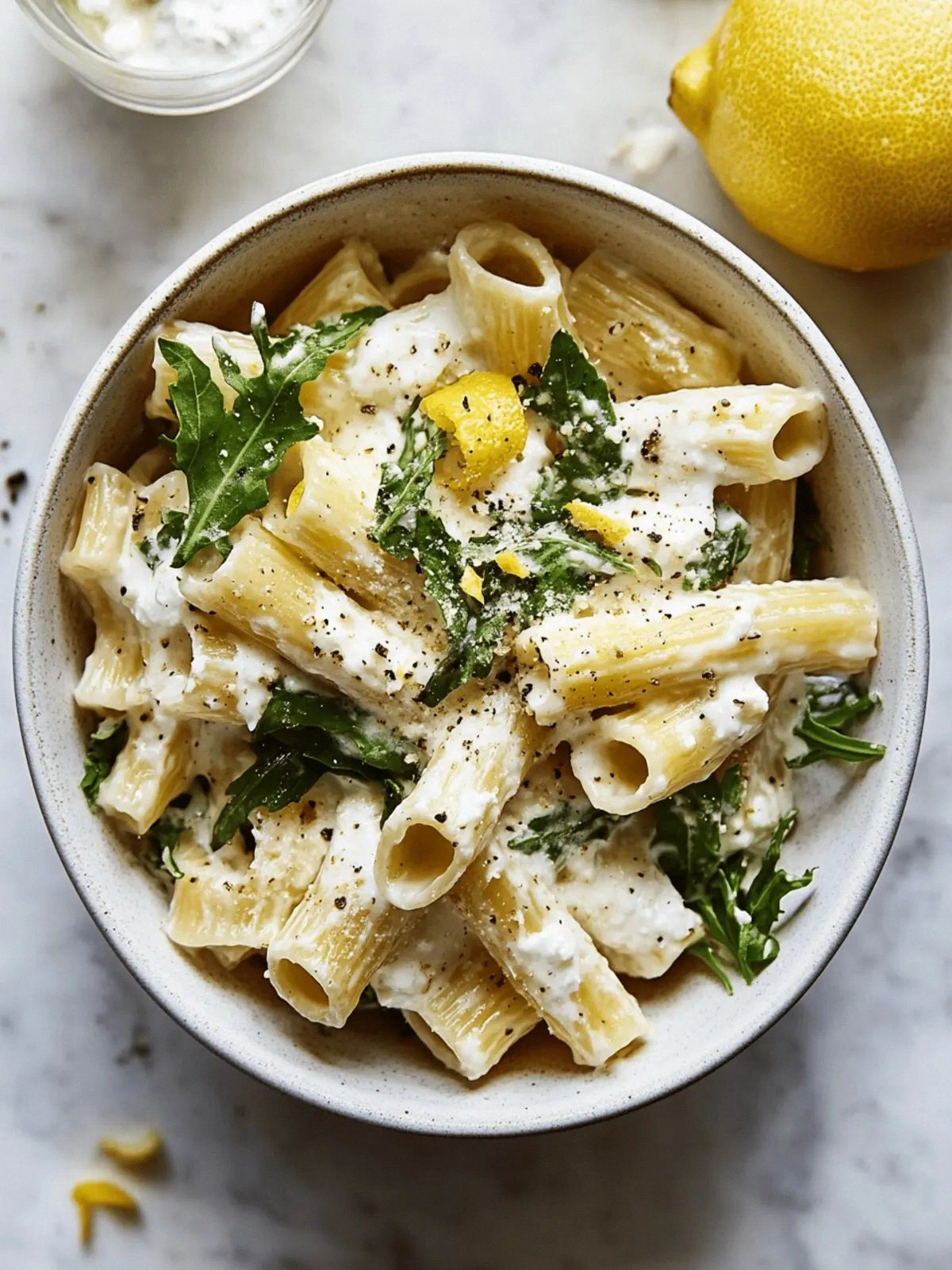
I was halfway through a chaotic dinner prep when the idea hit me like a sudden burst of citrus. My kitchen was a whirlwind of boiling pasta, a splash of lemon juice, and a pile of ricotta that had been gathering dust in the fridge. I stared at the ingredients, feeling the urge to create something that would turn the ordinary into extraordinary. That moment sparked a daring challenge: could I turn a simple pasta dish into a creamy, tangy masterpiece that would make everyone ask for seconds? I dared myself to taste this and not go back for seconds.
Picture the aroma of pasta dancing in the air, the bright, almost electric scent of lemon, and the subtle earthiness of fresh arugula. The sizzle of olive oil as it warms in the pan is a promise of silky texture, while the gentle crackle of the ricotta as it melts into the sauce feels like a secret handshake between flavors. My ears caught the faint hiss of steam, and my fingers tingled against the heat of the saucepan, each sensation building a crescendo of anticipation. The dish would be a symphony of creamy, citrusy notes punctuated by a peppery bite that lingers like a well-timed encore. If you’re wondering whether this is just another pasta recipe, let me assure you: it’s a revelation.
What sets this version apart is the meticulous balance of acidity, richness, and peppery heat that you rarely find in a single bowl. The ricotta is folded in at the very last moment, preserving its airy lightness and preventing it from becoming heavy or clumpy. Lemon juice is not just a garnish; it’s the backbone that brightens every bite and cuts through the creaminess like a bright spotlight. A dash of chili flakes adds a whisper of heat that surprises without overpowering, creating a dynamic contrast that keeps the palate engaged. The result is a dish that feels indulgent yet refreshingly light, a paradox that makes it unforgettable.
I’ve spent countless hours tweaking sauces, and this is hands down the best version you’ll ever make at home. Most recipes get this completely wrong by overcooking the pasta or overloading the sauce with cheese, but here every component shines in its own right. The key is timing—each element arrives at the right moment, like actors taking center stage at the perfect cue. I’ll be honest—I ate half the batch before anyone else got to try it, but that’s the sign of a dish that’s too good to resist. Picture yourself pulling this out of the stove, the whole kitchen smelling incredible, and everyone asking for your secret. Let me walk you through every single step—by the end, you’ll wonder how you ever made it any other way.
What Makes This Version Stand Out
- Flavor: The lemon’s bright acidity cuts through the ricotta’s richness, creating a balanced palate that’s both indulgent and refreshing.
- Texture: The ricotta remains light and fluffy because it’s folded in off the heat, preventing it from thickening into a clumpy mess.
- Heat: A half teaspoon of chili flakes offers a subtle kick that lingers, giving the dish a sophisticated edge.
- Freshness: Fresh arugula is added at the very end, preserving its peppery bite and vibrant color.
- Speed: From start to finish, the entire dish takes under 45 minutes, making it perfect for weeknights.
- Versatility: The sauce’s creamy base adapts beautifully to protein additions like grilled chicken or shrimp.
- Presentation: A final dusting of parmesan and a drizzle of olive oil turns this simple plate into a gourmet masterpiece.
- Audience: Whether you’re cooking for a crowd or a cozy dinner, this dish consistently earns rave reviews.
Alright, let's break down exactly what goes into this masterpiece...
Inside the Ingredient List
The Flavor Base
Eight ounces of pasta are the canvas for this sauce; choose a shape that holds sauce, like penne or fusilli. The pasta’s starches will help thicken the sauce naturally, so don’t rinse after boiling—reserve a splash of that starchy water. The lemon’s juice is the star of the show; use a fresh, ripe lemon to capture a bright, clean acidity that lifts every bite. The olive oil is the glue that brings everything together; a good extra-virgin oil adds depth without overpowering the delicate flavors.
The Texture Crew
Fifteen ounces of ricotta is the heart of the dish, delivering a velvety, airy texture that coats the pasta like a cloud. The ricotta’s mild flavor allows the lemon and chili to shine, so choose a brand with a smooth consistency. One half cup of parmesan cheese adds a nutty sharpness and a subtle umami kick; grate it finely to ensure it melts evenly. The arugula’s peppery bite is the final flourish, adding a bright, slightly bitter contrast that cuts through the creaminess.
The Unexpected Star
Half a teaspoon of chili flakes is a small but mighty component; it provides a gentle heat that lingers on the palate. Too much, and the dish becomes fiery; too little, and it loses its edge. If you prefer a milder version, substitute the chili flakes with a pinch of smoked paprika for a smoky nuance. The chili’s heat also balances the ricotta’s richness, creating a harmonious dance of flavors.
The Final Flourish
Salt and black pepper are the universal seasoning that ties all elements together; add them to taste, but remember that parmesan already contributes saltiness. The final touch is a drizzle of olive oil and a sprinkle of fresh arugula, which add sheen and a burst of freshness. These finishing touches elevate the dish from simple to spectacular, making it feel like a restaurant-quality plate.
Everything's prepped? Good. Let's get into the real action...
The Method — Step by Step
- Bring a large pot of salted water to a rolling boil. Add the pasta and cook until al dente, usually about 8-10 minutes depending on the shape. Keep a close eye on the pasta; overcooking will ruin the sauce’s ability to cling. Drain, reserving a cup of pasta water, and set aside.
- While the pasta cooks, heat the olive oil in a large skillet over medium heat. Add the chili flakes and let them toast for 30 seconds, releasing their aroma. This simple step builds depth and ensures the heat is evenly distributed throughout the dish.
- Squeeze the juice of one fresh lemon into the skillet, scraping the bottom to release any stuck bits. The citrus will immediately start to steam, creating a fragrant cloud that signals the sauce is ready. Stir until the oil and lemon juice combine into a silky mixture.
- Reduce the heat to low and fold in the ricotta, stirring gently until it’s fully incorporated. The low heat preserves the ricotta’s airy texture, preventing it from curdling. Taste the sauce; it should be creamy but not heavy, with a bright lemon undertone. If it feels thick, add a bit more pasta water to loosen it.
- Add the cooked pasta to the skillet and toss vigorously, ensuring every strand is coated with the luscious sauce. Sprinkle in the parmesan cheese and stir until it melts into the mixture. The cheese will add a savory depth that balances the lemon’s brightness. Keep the heat low to prevent the sauce from separating.
- Season with salt and freshly ground black pepper to taste. The pepper adds a subtle heat that complements the chili flakes, while the salt enhances every component. Taste again; the flavors should harmonize without any single element overpowering the others.
- Fold in the fresh arugula just before serving. The residual heat will wilt the leaves slightly, preserving their peppery crunch. Plate the pasta, drizzle with a little more olive oil, and garnish with a final sprinkle of parmesan. Serve immediately while the pasta is still warm and the sauce is silky. Enjoy the burst of citrus, cream, and pepper that dances across your taste buds.
That's it — you did it. But hold on, I've got a few more tricks that'll take this to another level...
Insider Tricks for Flawless Results
The Temperature Rule Nobody Follows
Never let the sauce come to a full boil after adding the ricotta. The delicate curds will separate, turning the sauce into a clumpy mess. Keep the heat low and stir gently; the sauce should stay silky and pourable. This simple rule is the secret behind the dish’s smooth, velvety texture.
Why Your Nose Knows Best
The aroma of lemon zest is a cue that the sauce is ready to receive the ricotta. If you smell a sharp citrus note, it means the oil has absorbed the lemon’s bright essence. This olfactory sign ensures your sauce will have a bright, fresh flavor profile that cuts through richness.
The 5-Minute Rest That Changes Everything
After tossing the pasta in the sauce, let it rest for five minutes before plating. During this short pause, the pasta continues to absorb the sauce, deepening the flavor and ensuring every bite is perfectly coated. I’ve seen dishes that are too rushed; this pause turns them into gourmet.
The Secret to a Shimmering Finish
Finish the dish with a small drizzle of cold extra-virgin olive oil. The cold oil creates a glossy sheen that makes the plate look restaurant‑ready. It also adds a subtle, fruity note that ties all the flavors together.
The Perfect Balance of Heat
If you prefer a spicier bite, double the chili flakes. If you’re sensitive to heat, reduce the flakes to a quarter teaspoon. The key is to taste as you go; this ensures the heat complements rather than dominates the citrus and cream.
The Final Touch of Freshness
Add the arugula at the very end to preserve its peppery bite and vibrant color. If you add it too early, it wilts and loses its crunch. A quick toss and a final sprinkle of parmesan gives the dish a lively, fresh finish.
Creative Twists and Variations
This recipe is a playground. Here are some of my favorite ways to switch things up:
Grilled Chicken Power
Add sliced grilled chicken breast to the pasta for a protein boost. The smoky flavor of the chicken pairs wonderfully with the lemony ricotta sauce, creating a hearty yet light dish. This variation is perfect for a quick weeknight meal that satisfies without overloading.
Sautéed Shrimp Delight
Replace the chicken with shrimp sautéed in garlic and a splash of white wine. The briny shrimp enhances the citrusy notes, while the wine adds depth. Serve with a squeeze of fresh lemon for an elegant, seafood-infused twist.
Pesto Fusion
Swap the lemon juice for a spoonful of basil pesto. The herbal richness of pesto complements the ricotta’s creaminess, creating a green, aromatic sauce. Finish with a sprinkle of pine nuts for crunch and a touch of nutty flavor.
Mushroom Medley
Sauté sliced mushrooms in butter and garlic, then fold them into the sauce. The earthy umami of mushrooms deepens the dish’s flavor profile, making it more complex and satisfying. This version is a great way to incorporate more vegetables into your pasta.
Spicy Cajun Kick
Replace the chili flakes with Cajun seasoning for a bold, smoky heat. The blend of paprika, oregano, and cayenne adds layers of flavor that pair well with the lemon’s brightness. This spicy twist is ideal for those who like their pasta with a punch.
Vegetarian Veggie Bowl
Add roasted cherry tomatoes and spinach to the pasta for a colorful, nutrient-packed meal. The roasted tomatoes bring a sweet acidity that complements the lemon, while spinach adds a subtle earthiness. This version is perfect for a light, plant-based dinner.
Storing and Bringing It Back to Life
Fridge Storage
Store leftovers in an airtight container in the refrigerator for up to 3 days. The sauce may thicken slightly, so when reheating, add a splash of milk or pasta water to restore its silky consistency. Keep the arugula separate until serving to preserve its crunch.
Freezer Friendly
Freeze the pasta in a sealed container for up to 2 months. When ready to eat, thaw overnight in the refrigerator and reheat gently over low heat, stirring in a bit of broth to loosen the sauce. The ricotta may separate slightly, but a quick whisk will bring it back to smoothness.
Best Reheating Method
Reheat the dish in a skillet over low heat, stirring frequently. Add a tiny splash of water or broth to steam the pasta back to life, preventing it from drying out. Finish with a drizzle of olive oil to restore sheen and a sprinkle of fresh arugula for that final burst of freshness.