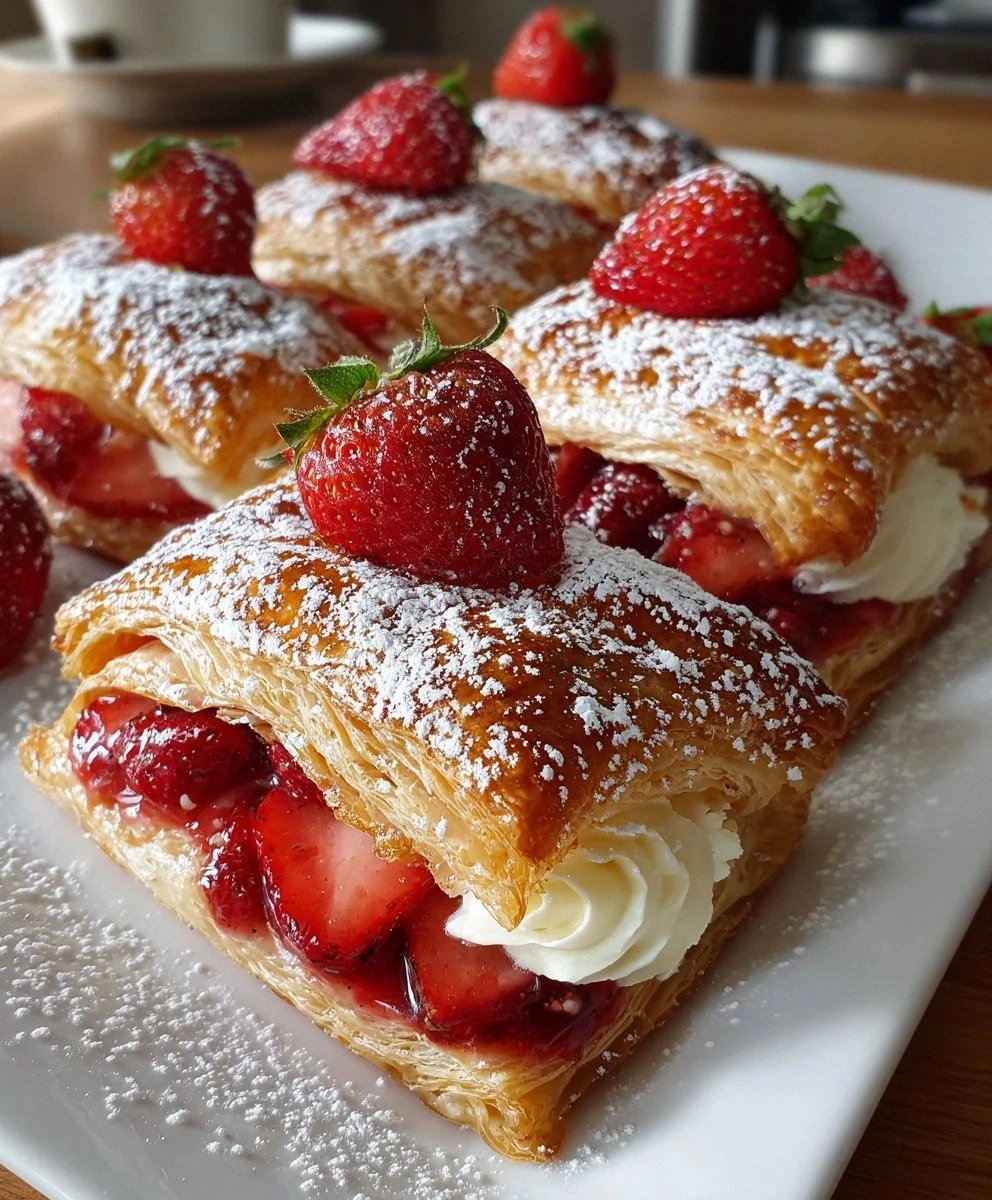
I still remember the day I ruined an entire tray of strawberry pastries so badly that even my golden retriever turned up his nose. The filling had turned to strawberry soup, the bottoms were soggy enough to qualify as pudding, and the tops had the color and texture of a sunburned marshmallow. I stood there in my flour-dusted kitchen, staring at the disaster, wondering if I should just take up stamp collecting instead of baking. Fast-forward three weeks and countless test batches later, and I finally cracked the code to the most impossibly flaky, strawberry-packed, cream-filled puff pastry that makes grown adults close their eyes and sigh when they taste it.
Picture this: midnight, house quiet, I'm in pajamas with my hair looking like I stuck my finger in an electrical socket, pulling a tray of these beauties from the oven. The kitchen fills with this buttery, sweet aroma that drifts down the hallway like a dessert-scented burglar. I break one open — yes, at midnight, judge me — and the layers shatter so delicately that crumbs snow down onto the counter like edible confetti. Inside, the strawberries have melted into this glossy, jammy river that's still bubbling from the heat, and the cream cheese filling has puffed into a cloud that tastes like someone whipped cheesecake and vanilla ice cream together and somehow made it better.
I ate three. Don't act shocked, you would've done the same. The fourth one was technically for quality control, but let's be honest, I just wanted another hit of that contrast between the shatteringly crisp pastry and the cool, creamy filling. By the time my roommate stumbled into the kitchen the next morning, all that remained were a few strategic crumbs arranged to look accidental and a note that said "Gone to buy more strawberries — emergency situation." She still doesn't know I ate half the batch before sunrise.
Here's the thing: most strawberry puff pastry recipes treat the fruit like an afterthought, chucking raw berries onto dough and hoping for the best. That's like hiring a world-class violinist to play backup tambourine. This version treats strawberries like the stars they are — we cook them down into a glossy compote that concentrates every drop of summer sweetness, then layer them with a cream cheese filling so light it practically floats off the spoon. The result? Pastries that stay crisp for days, with filling that doesn't leak or weep or do any of those dramatic things fillings love to do. Let me walk you through every single step — by the end, you'll wonder how you ever made it any other way.
What Makes This Version Stand Out
Strawberry Alchemy: Instead of tossing raw berries onto dough like amateur hour, we transform them into a glossy compote that tastes like someone distilled summer into a spreadable form. The cooking process intensifies the strawberry flavor until it becomes this concentrated burst of sunshine that pairs perfectly with the buttery pastry.
Leak-Proof Filling System: Say goodbye to soggy bottoms forever. We create a barrier system that keeps the cream cheese filling lofty and the pastry crisp, even after three days. Most recipes skip this step and end up with sad, deflated pastries that require a fork and a lot of denial.
Buttery Lamination Magic: Even with store-bought puff pastry, we employ a quick lamination trick that creates layers so delicate they shatter like thin ice when you bite in. Your guests will think you spent hours folding dough like a French pastry chef with something to prove.
Make-Ahead Champion: These beauties freeze beautifully before baking, meaning you can have fresh, hot pastries on a Wednesday morning without changing out of pajamas. Just pop them from freezer to oven and pretend you're the kind of person who has life together.
Flavor Depth Revolution: A whisper of almond extract and fresh lemon juice doesn't just enhance the strawberries — it makes them taste like they're wearing a tuxedo and ready for a red carpet. The difference is so dramatic that you'll never go back to plain strawberry again.
Crowd Reaction Guarantee: I've served these at brunches, book clubs, and that awkward office party where nobody knows what to bring. The response is always the same: eyes closed, small moan, then the inevitable "Oh my god, what is IN these?" It's like watching people discover chocolate for the first time.
Alright, let's break down exactly what goes into this masterpiece...
Inside the Ingredient List
The Flavor Foundation
Puff pastry forms the buttery backbone of this entire operation, and here's where I get picky. Look for the all-butter varieties in the freezer section — they cost a dollar more but taste like a million bucks. The cheap stuff uses shortening, which bakes up tasting like you're eating a candle. You want the pastry that lists butter as the first ingredient, preferably imported from France because those people understand layers like nobody else. Thaw it in the fridge overnight, not on the counter, unless you enjoy playing Russian roulette with gluten development.
Fresh strawberries carry the entire flavor profile, so channel your inner produce snob here. Smell them first — they should smell like summer and happiness, not like the plastic container they came in. Look for berries that are uniformly red without white shoulders, which indicate they were picked too early and will taste like disappointment. Size doesn't matter as much as fragrance; those tiny wild strawberries pack more flavor than their giant cousins. If you can only find mediocre berries, don't panic — we're concentrating their flavor, so even the shyest strawberries will sing.
The Texture Crew
Cream cheese forms the cloud-like base that makes people wonder if angels moonlight as dairy farmers. Full-fat is non-negotiable here; the reduced-fat versions contain stabilizers that turn grainy when baked. Let it soften on the counter for exactly 47 minutes — any longer and it gets too loose, any shorter and you'll end up with lumps that no amount of mixing will fix. I learned this the hard way when I tried to rush the process and ended up with filling that looked like cottage cheese having an identity crisis.
Heavy cream whips into the cream cheese like silk scarves in the wind, lightening everything into a texture that practically floats off the spoon. Don't even think about substituting milk or half-and-half; they contain too much water and will weep into the pastry like a tragic romance novel. Cold cream whips faster, so keep it in the coldest part of your fridge until the exact moment you need it. Pro tip: buy cream with the highest fat content you can find — it stabilizes better and tastes like someone figured out how to bottle clouds.
The Flavor Amplifiers
Lemon juice acts like a spotlight on the strawberries, brightening their flavor until it practically jumps off the plate. Fresh-squeezed makes a difference here — bottled juice tastes like someone tried to recreate sunshine in a factory. Just a teaspoon transforms the entire compote from sweet to complex, adding layers that make people ask for your secret. Meyer lemons are even better if you can find them, with their floral, less acidic profile that plays beautifully with berries.
Vanilla extract gets added twice — once in the compote and again in the cream filling — because restraint is overrated when you're creating something magical. Real extract, not the imitation stuff that tastes like a vanilla-scented candle. The alcohol cooks off, leaving behind these warm, aromatic notes that make the strawberries taste like they're wearing a cashmere sweater. Madagascar vanilla is my go-to, but Tahitian works if you want something more floral and delicate.
The Sweet Balance
Granulated sugar does double duty here — sweetening the compote while helping to draw moisture from the berries, concentrating their flavor into something almost jam-like. Don't go overboard; you want to enhance the strawberries, not drown them in sweetness. I use less sugar than most recipes because I'd rather taste the fruit than just taste sweet. The compote should taste like strawberries, only more so — like strawberries that have been to finishing school and learned some manners.
Powdered sugar serves as the final flourish, dissolving instantly on your tongue and leaving behind just a whisper of sweetness. It also creates that professional bakery look that makes people think you studied in Paris instead of watching YouTube videos in your pajamas. Sift it through a fine-mesh strainer for that perfect snow-dusted appearance that makes everyone reach for their phone before they even taste it.
Everything's prepped? Good. Let's get into the real action...
The Method — Step by Step
- Start with the strawberry compote because it needs time to cool and thicken into that glossy, spoon-coating consistency that dreams are made of. Hull and quarter your strawberries — don't just chop them randomly, because uniform pieces cook evenly and look prettier in the final pastries. Toss them in a heavy saucepan with sugar and lemon juice, then turn the heat to medium and watch the magic happen. The berries will release their juice first, creating a pink pool that looks like someone melted a strawberry milkshake, then they'll start to break down and bubble like lava in the most delicious volcano ever. Stir occasionally, but not constantly — you want them to caramelize slightly on the bottom for that deep, complex flavor that separates amateur from artisan.
- While the berries bubble away, grab your cream cheese from the counter and check its temperature by poking it gently with your finger. It should feel like room-temperature butter — soft enough to leave an imprint but not so warm it's starting to melt around the edges. Beat it in a stand mixer (or with a hand mixer if you're feeling nostalgic for 1980s arm workouts) until it's completely smooth and fluffy, scraping down the sides twice because nobody likes surprise cream cheese lumps in their pastry. This step incorporates air, which is crucial for that cloud-like texture we're chasing. The mixture should look like it's been whipped by angels and taste like cheesecake's more sophisticated cousin.
- Now comes the moment of truth — adding the heavy cream to the cream cheese. Pour it in a slow, steady stream while the mixer runs on medium speed, watching as the two textures marry into something that defies physics. The mixture will thicken and lighten simultaneously, becoming this satiny smooth filling that holds peaks like softly whipped cream but tastes like the best cheesecake filling you've ever had. Add the vanilla and almond extracts now, plus a pinch of salt to balance the sweetness. The salt is non-negotiable — it's like the bass line in a song, you don't always notice it, but you'd miss it if it were gone.
- Check your strawberry compote — it should have reduced by about half and coat the back of a spoon like liquid velvet. If you drag your finger through it, the line should hold its shape for a few seconds before slowly filling back in. Remove it from heat and let it cool completely; warm compote will melt your pastry layers and create the dreaded soggy bottom that haunts pastry chefs' nightmares. Spread it on a plate and pop it in the fridge for speed-cooling if you're impatient, but don't stick the hot pan directly in the fridge unless you enjoy replacing refrigerator shelves.
- Time to work with the puff pastry — this is where people usually panic, but stay with me here because this is worth it. Unfold your thawed pastry on a lightly floured surface and notice how the layers are already visible like geological strata in the most delicious canyon ever. Roll it gently just to smooth out the creases and create an even thickness, but don't go crazy — overworking destroys those precious layers we're paying for. Cut into rectangles about 3x4 inches, but honestly, any size works as long as you're consistent. Consistency means even baking, and even baking means you won't have some pastries burned while others are still pale and doughy.
- Assemble the pastries by creating a little border system that prevents the filling from escaping like prisoners during a jailbreak. Score a smaller rectangle inside each piece of pastry, cutting halfway through the thickness to create a frame that will puff up and contain our fillings. This technique, stolen from French pastry masters, means the edges rise dramatically while the center stays lower, creating a perfect well for our fillings. Brush the scored lines with a little water — this helps the layers separate and rise even higher, like they're showing off for company.
- Pipe or spoon the cream cheese filling into the center wells, staying inside your scored border like you're coloring inside the lines in kindergarten. Add a generous dollop of the cooled strawberry compote on top, swirling it slightly into the cream cheese for that marbled effect that looks like edible abstract art. Don't overfill — tempting as it is, too much filling will bubble over and create a sticky mess that burns and smokes and sets off every smoke detector in a three-block radius.
- Brush the exposed pastry with egg wash (one egg beaten with a splash of water) for that golden, glossy finish that makes people think you went to culinary school. The egg wash isn't just for looks — it creates a barrier that helps the pastry stay crisp and gives it that professional bakery shine. Use a light hand; too much egg wash pools in the crevices and bakes up looking like scrambled eggs had a party on your pastries. A thin, even coat is all you need for maximum impact with minimum effort.
- Bake in a preheated 400°F oven for 18-22 minutes, but don't walk away because this is where magic happens fast. The pastries will puff dramatically in the first five minutes — it's like watching time-lapse photography in real time as the layers separate and rise. After 15 minutes, peek through the oven window and watch for the edges turning deep golden brown and the bottoms looking crisp and caramelized. The filling should be bubbling gently, creating little strawberry volcanoes that smell like someone bottled summer and set it on fire in the best possible way.
- Cool for exactly five minutes on the baking sheet — any longer and the bottoms will steam and soften, any shorter and you'll burn your mouth on molten strawberry lava. Transfer to a wire rack to cool completely if you have willpower of steel, or dig in while they're still warm because life's too short for room-temperature pastries. Dust with powdered sugar right before serving for that fresh snowfall effect that makes everyone reach for their cameras before their forks.
That's it — you did it. But hold on, I've got a few more tricks that'll take this to another level...
Insider Tricks for Flawless Results
The Temperature Rule Nobody Follows
Here's where most home bakers go wrong: they think room temperature means "whatever temperature my room happens to be." But pastry speaks in precise thermal language, and understanding this will elevate your baking from good to "why are there tears in my eyes" level. Your cream cheese should feel like a perfectly ripe peach — soft enough to yield to gentle pressure but not so warm it's melting at the edges. Too cold and you'll over-mix trying to smooth it, incorporating too much air and creating a filling that deflates like a sad balloon. Too warm and it becomes a runny mess that leaks out during baking like it's trying to escape. I keep a kitchen thermometer handy and aim for 68-70°F — yes, I'm that precise, and yes, it makes a difference you can taste.
The same rule applies to your heavy cream — it should be cold enough to make your fingers ache slightly when you touch the carton. Warm cream won't whip properly and will create a filling that's dense instead of cloud-like. I store my mixing bowl and beaters in the freezer for ten minutes before whipping, because cold equipment helps the fat molecules in the cream trap air more efficiently. This isn't just kitchen science; it's the difference between a filling that tastes luxurious and one that tastes like cream cheese with commitment issues.
Why Your Nose Knows Best
Trust your sense of smell more than any timer when making the strawberry compote. The moment you catch that caramelized, jammy aroma wafting from the pan, you're approaching the sweet spot where flavors concentrate and intensify. Before that point, the berries are just hot fruit in syrup. After that point, you're heading toward fruit leather territory. That perfect moment when the smell shifts from fresh and bright to deep and complex? That's when you pull it off the heat. I learned this from a French pastry chef who spoke barely any English but communicated volumes through expressive sniffing and approving nods.
The almond extract is another place where your nose becomes your best kitchen tool. Add it drop by drop, stirring and sniffing between additions, because too much makes your pastries taste like marzipan had an identity crisis. You want just enough to make people ask "what's that amazing flavor?" without being able to place it. It's like adding a bass note to a song — you feel it more than you consciously taste it, but you'd miss it if it were gone.
The 5-Minute Rest That Changes Everything
After baking, let the pastries rest on the pan for exactly five minutes before transferring to a wire rack. This isn't just about preventing burned tongues — though trust me, molten strawberry compote has the heat retention of volcanic rock. During this crucial window, the steam trapped inside redistributes, the filling sets slightly, and the bottoms crisp up from the residual heat of the pan. Move them too early and the bottoms steam on the rack, turning soggy. Wait too long and they stick to the pan like they're trying to become permanent fixtures. Five minutes is the Goldilocks zone where everything becomes perfectly balanced.
During this rest, resist the urge to poke, prod, or otherwise investigate your creations. I know they're calling to you with their golden, glossy tops and that intoxicating aroma, but patience here pays off in dividends of crisp-bottomed perfection. Use this time to make coffee, set the table, or just stand there basking in the glory of what you've accomplished. You've earned this moment of anticipation — it's the baking equivalent of letting a fine wine breathe.
Creative Twists and Variations
This recipe is a playground. Here are some of my favorite ways to switch things up:
Peach Bellini Pastries
Swap the strawberries for ripe peaches and add a splash of prosecco to the compote for a brunch-worthy variation that tastes like Sunday morning in the Hamptons. The prosecco adds a subtle effervescence that makes the peach flavor taste somehow lighter and more sophisticated. Reduce the sugar slightly since peaches are naturally sweeter than strawberries, and add a pinch of fresh thyme for that herbaceous note that makes people ask if you studied in Provence. The cream cheese filling gets a tablespoon of honey instead of sugar, creating a more complex sweetness that plays beautifully with the floral peaches.
Chocolate Raspberry Decadence
Replace strawberries with raspberries and fold mini chocolate chips into the cream cheese filling for a version that tastes like someone married cheesecake and chocolate truffle. The tart raspberries cut through the richness of the chocolate, creating a balanced bite that doesn't overwhelm. Add a teaspoon of instant espresso powder to the compote — it won't make it taste like coffee, but it'll deepen the chocolate flavor until it tastes expensive. Dust with cocoa powder instead of powdered sugar for a sophisticated finish that makes these appropriate for dinner parties where you want to impress people who use words like "mouthfeel" and "flavor profile."
Tropical Mango Passion
Mango and passion fruit create a tropical escape that makes January feel like July in the Caribbean. The mango needs to be perfectly ripe — it should feel like a ripe avocado when squeezed gently. Passion fruit juice adds an acidic punch that prevents the sweetness from becoming cloying. Add a tablespoon of rum to the compote because we're adults and we deserve nice things. The cream cheese filling gets lime zest instead of lemon, and a drop of coconut extract transports you straight to a beach chair with an umbrella drink in hand.
Savory Breakfast Version
Flip the script completely by using everything bagel seasoning instead of sugar, filling with herbed cream cheese and smoked salmon, and topping with everything bagel seasoning again. The puff pastry becomes a vehicle for silky cream cheese, smoky salmon, and the crunchy seedy topping that makes everything bagels addictive. Add some thinly sliced red onion and a sprinkle of capers for brightness. These disappear faster at brunch than mimosas, and nobody believes you made them yourself until they see the flour still dusted on your countertops.
Apple Pie Meets Pastry
Granny Smith apples sautéed in brown butter with cinnamon and a splash of bourbon create a fall variation that tastes like someone wrapped apple pie in the flakiest crust imaginable. The tart apples hold their shape during baking, providing textural contrast to the creamy filling. Add a pinch of cardamom to make it taste like you're drinking chai while eating apple pie at the same time. The cream cheese filling gets a tablespoon of maple syrup, creating a New England autumn in every bite that makes people want to wear chunky sweaters and take hay rides.
Lemon Blueberry Sunshine
Blueberries burst and create purple rivers through lemon-scented cream cheese in a variation that tastes like someone captured sunshine and folded it into pastry. The key is using both lemon zest and juice — the zest provides essential oils that taste like lemon squared, while the juice adds brightness. Fold fresh blueberries into the cooled compote rather than cooking them, so they stay plump and burst dramatically during baking. These are what you make when you need to taste summer in February or when life needs more purple in it.
Storing and Bringing It Back to Life
Fridge Storage
These pastries stay crisp in an airtight container at room temperature for up to two days, which is honestly longer than they last in my house. Line the container with paper towels to absorb any residual moisture, and don't stack them more than two layers deep — the weight will crush the delicate puff. If you must refrigerate them (though I don't recommend it), warm them in a 350°F oven for 5-7 minutes before serving. The fridge is the enemy of crisp pastry, creating condensation that turns your beautiful layers into something resembling wet cardboard. Trust me, I've made this mistake so you don't have to.
Freezer Friendly
Unbaked pastries freeze beautifully for up to three months, making you look like a domestic genius when you pull fresh pastries from the oven on a random Tuesday morning. Assemble them completely, then freeze on a baking sheet until solid before transferring to freezer bags. Bake from frozen, adding 5-7 minutes to the baking time, and prepare for your kitchen to smell like a French bakery. Baked pastries also freeze well — cool completely, wrap individually, and freeze for up to two months. Reheat from frozen at 375°F for 12-15 minutes until they're hot and crisp again. The filling stays perfect, the pastry regains its shatter, and you get to pretend you're the kind of person who has fresh pastries ready at a moment's notice.
Best Reheating Method
The oven is your only friend here — microwaves turn puff pastry into rubber faster than you can say "soggy bottom." Place pastries on a baking sheet in a 350°F oven for 5-8 minutes until heated through and crisp. If they seem a bit dry, place a small oven-safe dish of water on the lower rack to create steam that revives them without making them soggy. For individual pastries, a toaster oven works perfectly and makes your office smell like you're running a secret bakery. The key is gentle heat that warms the filling without over-crisping the pastry or creating hot spots that burn the edges.