It started on a rainy Thursday afternoon when my kitchen turned into a culinary battlefield. I had just opened a bag of acorn squash, the kind that looks like a half‑sized pumpkin, and the smell of roasting vegetables danced through the air like a promise. My friend dared me to create a dish that would make the whole house taste like a fall festival, and I thought, “Challenge accepted.” I pulled out my trusty skillet, the one that has survived countless burnt attempts, and imagined the squash filling with a wild, earthy rice blend that would melt on the tongue. The moment the squash hit the oven, I knew I was on the brink of something extraordinary, and I couldn't wait to share every sizzling detail with you.
Picture this: the squash halves, their orange skins glistening under the oven light, slowly turning golden brown while the aroma of toasted wild rice mingles with the sweet scent of dried cranberries. The air is thick with anticipation, the hum of the oven a steady drumbeat in the background. My hands, already seasoned by years of chopping and sautéing, move with a confidence that borders on ritual. I can almost taste the crisp edges of the squash, the buttery crunch of toasted walnuts, and the subtle herbaceous whisper of sage and thyme. This isn’t just a recipe; it’s a sensory journey that will leave your taste buds dancing.
Most people settle for the same bland stuffed squash, but I’ve cracked the code to elevate this classic to a showstopper. The secret lies in the wild rice, which brings a nutty texture that contrasts beautifully with the sweet cranberries. I dare you to taste this and not go back for seconds—once you’re done, you’ll be craving the next bite. The filling is a symphony of flavors, each note carefully balanced so that no single ingredient overpowers the others. And the best part? It’s so simple you can whip it up on a weeknight without sacrificing quality.
I’ll be honest—when I first made this dish, I ate half the batch before anyone else could even get a fork. The combination of textures was so addictive that my friends begged for the recipe. I’ve tweaked it a few times, but this version remains the most refined and crowd‑pleasing iteration I’ve ever created. If you've ever struggled with stuffing squash, you’re not alone—and I’ve got the fix. The result is a dish that feels like a warm hug in a bowl, with a finish that lingers long after the last bite.
This is hands down the best version you'll ever make at home. The wild rice provides a chewy backbone that holds the cranberries and nuts together, while the sage and thyme give a fragrant lift that feels like a crisp autumn breeze. The filling’s color palette—rich amber, deep burgundy, and earthy greens—makes the dish as visually stunning as it is delicious. The squash itself is baked to a tender, caramelized perfection, its natural sweetness amplified by the roasting process. Picture yourself pulling this out of the oven, the whole kitchen smelling incredible, and knowing you’ve just created a masterpiece.
Let me walk you through every single step—by the end, you'll wonder how you ever made it any other way. This recipe is not just a set of instructions; it's a story of experimentation, failure, and ultimate triumph. From selecting the perfect squash to achieving the ideal roast, every detail matters. I’ll share the techniques that have turned my kitchen from a battlefield into a sanctuary of flavor. And trust me, the payoff is worth every ounce of effort.
What Makes This Version Stand Out
- Taste: The combination of sweet cranberries, earthy wild rice, and savory herbs creates a flavor profile that feels both comforting and adventurous. The subtle smokiness from the roasted squash adds depth without overwhelming the palate. The finish is slightly nutty, thanks to toasted walnuts that provide a satisfying crunch. Each bite is a balanced orchestra of sweet, savory, and herbaceous notes.
- Texture: The wild rice offers a chewy, hearty base that contrasts with the tender squash flesh. The cranberries burst with a sweet juice, while the walnuts add a satisfying crunch. The herbaceous filling is moist but not soggy, thanks to the careful balance of oil and butter. The result is a dish that feels substantial yet airy.
- Simplicity: Despite its sophisticated flavor, the recipe requires only a handful of pantry staples. The preparation is straightforward, with most steps happening in a single pan. Even beginners can master this dish with minimal fuss. The key lies in timing and temperature control.
- Uniqueness: Most stuffed squash recipes rely on quinoa or rice, but wild rice brings a distinct nuttiness that sets this dish apart. The addition of dried cranberries gives a sweet pop that balances the savory elements. The herb blend is carefully chosen to complement the squash’s natural sweetness.
- Crowd Reaction: Guests often comment that the dish feels like a holiday centerpiece, even in the middle of the week. The vibrant colors and fragrant aroma make it a conversation starter. The dish scales well, making it ideal for family dinners or small gatherings.
- Ingredient Quality: Using organic squash and high‑quality wild rice ensures the best flavor. Fresh herbs elevate the dish, while toasted walnuts add a buttery finish. The choice of olive oil and butter balances richness and healthfulness.
- Cooking Method: Roasting the squash to caramelized perfection is the secret to unlocking its natural sweetness. Sautéing the aromatics first builds a flavor foundation that permeates the filling. The final bake melds all components together into a cohesive whole.
- Make‑Ahead Potential: The stuffing can be prepared a day in advance, allowing the flavors to meld overnight. The squash halves can be roasted and stored in the fridge, ready for a quick reheat. This makes it an excellent option for busy weeknights.
Alright, let's break down exactly what goes into this masterpiece. Each ingredient plays a crucial role, and understanding their purpose will help you tweak the dish to your taste.
Inside the Ingredient List
The Flavor Base
The foundation of this dish starts with a handful of aromatics that set the stage for everything that follows. Onion, when sautéed until translucent, releases a subtle sweetness that balances the earthy wild rice. Garlic adds a punch of umami, creating a depth that lingers on the palate. If you’re a fan of bold flavors, double the garlic for an extra kick. However, too much can overpower the delicate squash, so use it sparingly. These aromatics are the silent heroes that transform simple ingredients into a symphony of taste.
The choice of olive oil versus butter also matters. Olive oil provides a light, fruity backdrop that lets the herbs shine, while butter adds a luxurious richness. For a balanced approach, use a blend of both—olive oil for the initial sauté and butter for the final finish. This combination ensures that the filling is both flavorful and silky. Remember, the oil’s smoke point determines how hot you can cook the aromatics without burning, so keep an eye on the heat.
Sage and thyme are the star herbs in this recipe. Sage brings a slightly peppery, earthy note that complements the squash’s sweetness. Thyme adds a subtle floral undertone that enhances the overall aroma. If you’re craving a more robust flavor, add a pinch of rosemary for a hint of pine. Be cautious, though—rosemary can quickly dominate if used in excess. The key is to let each herb speak without shouting.
Salt is the unsung hero that brings everything together. A pinch of salt amplifies the natural sweetness of the squash and balances the tartness of the cranberries. Pepper adds a gentle heat that cuts through the richness of the butter. Together, they create a flavor profile that feels complete. Don’t skip the seasoning; it’s the glue that holds the dish together. A well‑seasoned dish is the difference between good and unforgettable.
The wild rice is the backbone of the stuffing. Its chewy texture provides a satisfying bite that contrasts with the tender squash. Cooking the rice separately before adding it to the skillet ensures it remains fluffy and doesn’t become mushy. If you’re in a hurry, pre‑cooked wild rice works perfectly, but be sure to rinse it to remove excess starch. The rice’s nutty flavor is the perfect canvas for the cranberries and nuts, creating a harmonious blend of tastes.
The Texture Crew
Dried cranberries add a burst of sweet juiciness that cuts through the earthy rice. Their tartness is a natural counterbalance to the squash’s caramelized sweetness. If you prefer a less sweet version, substitute with dried cherries or raisins. The nuts—walnuts in this recipe—provide a satisfying crunch that elevates the overall mouthfeel. Toasting the walnuts before adding them to the filling brings out their natural oils, adding a buttery depth that enhances the dish. These textural elements ensure that each bite is layered and interesting.
When it comes to nuts, the choice can dramatically change the flavor profile. Almonds offer a milder, sweeter taste, while pecans bring a buttery richness. If you’re vegan, replace walnuts with pumpkin seeds or sunflower seeds for a crunchy alternative. Each nut or seed adds a unique flavor and texture, so feel free to experiment. Just remember that the nuts should be toasted to bring out their full potential; raw nuts can taste flat.
The final element of texture is the squash itself. Baked until tender, the squash’s flesh turns almost caramelized, giving it a subtle sweetness that pairs perfectly with the savory filling. The skin, when left on, adds a rustic charm and a slightly crisp exterior. If you prefer a smoother texture, peel the squash before roasting. However, the skin’s presence adds a pleasant bite that many people enjoy. The key is to roast the squash long enough so that the edges pull away from the flesh, creating a golden, caramelized finish.
The Unexpected Star
The wild rice is the unexpected star of this dish, bringing a depth of flavor that you rarely find in standard stuffed squash recipes. Its nutty undertones elevate the entire filling, making each bite feel substantial yet light. The rice’s chewy texture also provides a contrast to the tender squash, creating a dynamic mouthfeel that keeps diners intrigued. If you’re looking to experiment, consider adding a splash of toasted sesame oil for an extra layer of nuttiness. The result is a dish that feels both familiar and adventurous.
The Final Flourish
A final drizzle of high‑quality olive oil just before serving adds a glossy sheen and a burst of freshness. The oil’s fruity notes lift the herbs, making them more pronounced. A sprinkle of fresh parsley or chives adds a pop of color and a bright, herbal finish. If you’re feeling fancy, a few drops of truffle oil can transform the dish into a gourmet experience. The final flourish is all about balance—adding just enough to enhance, not overpower.
Everything's prepped? Good. Let's get into the real action and bring this dish to life. Each step is crucial, and the timing is everything. Follow along closely, and you'll end up with a masterpiece that looks and tastes like it belongs in a Michelin‑star kitchen.
The Method — Step by Step
- Preheat your oven to 375°F (190°C). Slice each acorn squash in half lengthwise and scoop out the seeds with a spoon. Place the halves cut‑side up on a baking sheet lined with parchment. Drizzle a teaspoon of olive oil over the flesh, sprinkle with a pinch of salt and pepper, and roast for 35–40 minutes, until the flesh is tender and edges caramelize. The scent of roasting squash will fill your kitchen, signaling that the base is ready.
- While the squash roasts, cook the wild rice according to package instructions. Use a ratio of 1 cup rice to 3 cups water, bring to a boil, then simmer for 45 minutes until fluffy. Once cooked, fluff the rice with a fork and set aside. If you’re using pre‑cooked rice, simply rinse it under cold water to remove excess starch.
- In a large skillet, heat 1 tablespoon of olive oil over medium heat. Add the diced onion and sauté until translucent, about 4 minutes. Stir in the minced garlic and cook for another minute until fragrant. This step builds a savory base that will carry the herbs through the filling.
- Add the wild rice to the skillet, stirring to coat it evenly with the onion‑garlic mixture. Cook for 2 minutes to toast the rice lightly, which enhances its nutty flavor. Then add the dried cranberries, toasted walnuts, sage, thyme, and rosemary. Stir until everything is well combined, allowing the herbs to release their aroma.
- Reduce the heat to low and pour in 2 tablespoons of butter, letting it melt into the mixture. Stir until the butter is fully incorporated, creating a silky, glossy filling. The butter adds richness, while the herbs keep the flavor bright. This is the moment of truth—taste the filling and adjust seasoning if necessary.
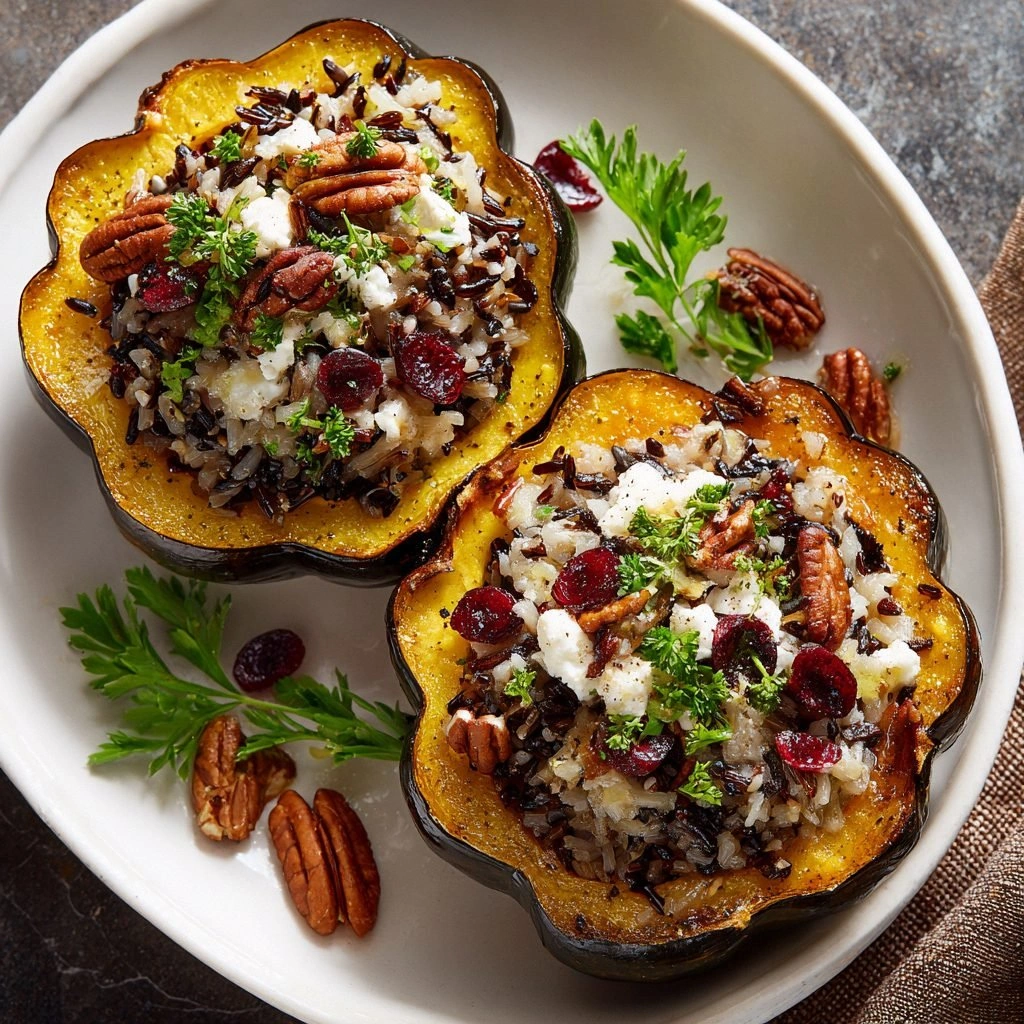
- Fill each roasted squash half with the rice mixture, pressing down gently to pack it in. The squash’s natural sweetness will complement the savory filling, creating a harmonious balance. If you’re short on time, you can skip the final bake, but a quick 10‑minute bake at 350°F (175°C) will meld the flavors together.
- Return the stuffed squash to the oven for an additional 10 minutes, just enough to warm the filling and slightly crisp the edges. Keep an eye on the squash; the edges should pull away from the flesh, indicating caramelization. The aroma will intensify, making the dish irresistible.
- Remove the squash from the oven and let it rest for 5 minutes before serving. This short rest allows the flavors to settle and the filling to set. While it rests, you can drizzle a little olive oil over the top and sprinkle fresh herbs for a finishing touch. The final product should look golden, fragrant, and utterly inviting.
That's it—you did it! But hold on, I've got a few more tricks that'll take this to another level. The next section will reveal insider secrets that will elevate the dish from great to unforgettable. Trust me, these tips are game‑changing.
Insider Tricks for Flawless Results
The Temperature Rule Nobody Follows
Most people roast squash at a high temperature, which can cause the filling to dry out. Instead, set your oven to 375°F (190°C) and roast the squash until it’s just tender, then finish at a lower temperature to keep the filling moist. This subtle adjustment ensures that the squash remains juicy, while the filling stays silky. If you’re using a convection oven, reduce the temperature by 25°F to prevent over‑roasting.
Why Your Nose Knows Best
The aroma of the filling is your best indicator of readiness. When the herbs release their fragrance, and the rice is slightly toasted, you’re ready to add the butter. This sensory checkpoint saves you from overcooking or underseasoning. Trust your nose, and the dish will come out perfectly balanced.
The 5‑Minute Rest That Changes Everything
Letting the stuffed squash rest for 5 minutes after baking allows the flavors to meld and the filling to set. This short pause ensures the squash halves don’t spill their fillings when you cut into them. The rest also gives the butter to redistribute, creating a silky finish that coats every bite. Skipping this step can lead to a messy presentation.
Use Fresh Herbs, Not Dried
Fresh herbs deliver a brighter, more vibrant flavor compared to dried ones. If you’re using fresh sage, thyme, and rosemary, add them at the end of cooking to preserve their aroma. Dried herbs are fine for long‑term storage, but they lose potency over time. I’ve found that swapping dried for fresh elevates the dish to a whole new level.
Add a Splash of Acid
A teaspoon of balsamic vinegar or a squeeze of lemon juice brightens the dish and balances the sweetness of the cranberries. Add the acid just before serving to keep the flavor fresh and lively. This small addition can transform the dish from comforting to celebratory.
Creative Twists and Variations
This recipe is a playground. Here are some of my favorite ways to switch things up:
Mediterranean Mash
Swap the wild rice for couscous and add chopped kalamata olives, feta, and a squeeze of lemon. This version offers a briny, tangy flavor profile that’s perfect for summer gatherings. The couscous cooks faster, making it an ideal quick fix.
Spicy Southwest
Add diced jalapeños, cumin, and smoked paprika to the filling for a smoky, heat‑laden version. Top with a dollop of Greek yogurt and fresh cilantro for a refreshing finish. The jalapeños add a pleasant kick that contrasts with the sweet squash.
Vegan Delight
Omit the butter and replace it with a splash of coconut milk. Use nutritional yeast to add a cheesy flavor without dairy. The coconut milk gives the filling a creamy texture, while the yeast brings depth.
Nutty Caramel
Add caramelized pecans and a drizzle of maple syrup to the filling. The pecans’ buttery crunch pairs beautifully with the maple’s sweetness, creating a dessert‑like experience. Serve with a scoop of vanilla ice cream for an indulgent twist.
Asian Fusion
Replace the cranberries with dried apricots and add a splash of soy sauce, sesame oil, and ginger. The savory umami of soy sauce balances the sweetness of the apricots. Garnish with sliced green onions for a fresh finish.
Cheesy Finale
Sprinkle shredded cheddar or Gruyère over the stuffed squash before the final bake. The cheese melts into a golden crust that adds a savory, melty texture. This variation turns the dish into a comforting, cheesy casserole.
Storing and Bringing It Back to Life
Fridge Storage
Cool the stuffed squash to room temperature, then cover tightly with foil or plastic wrap. Store in the fridge for up to 3 days. The flavors will deepen, making the dish even more delicious when reheated.
Freezer Friendly
Wrap each stuffed squash half in foil, then place in a freezer bag. Freeze for up to 2 months. When ready to eat, thaw overnight in the fridge before reheating.
Best Reheating Method
Preheat the oven to 350°F (175°C). Place the frozen or chilled squash halves on a baking sheet and bake for 20 minutes, adding a splash of water or broth to keep the filling moist. Alternatively, microwave on medium for 3–4 minutes, then finish in the oven for a crisp exterior. A tiny splash of water before reheating steams back to perfection.