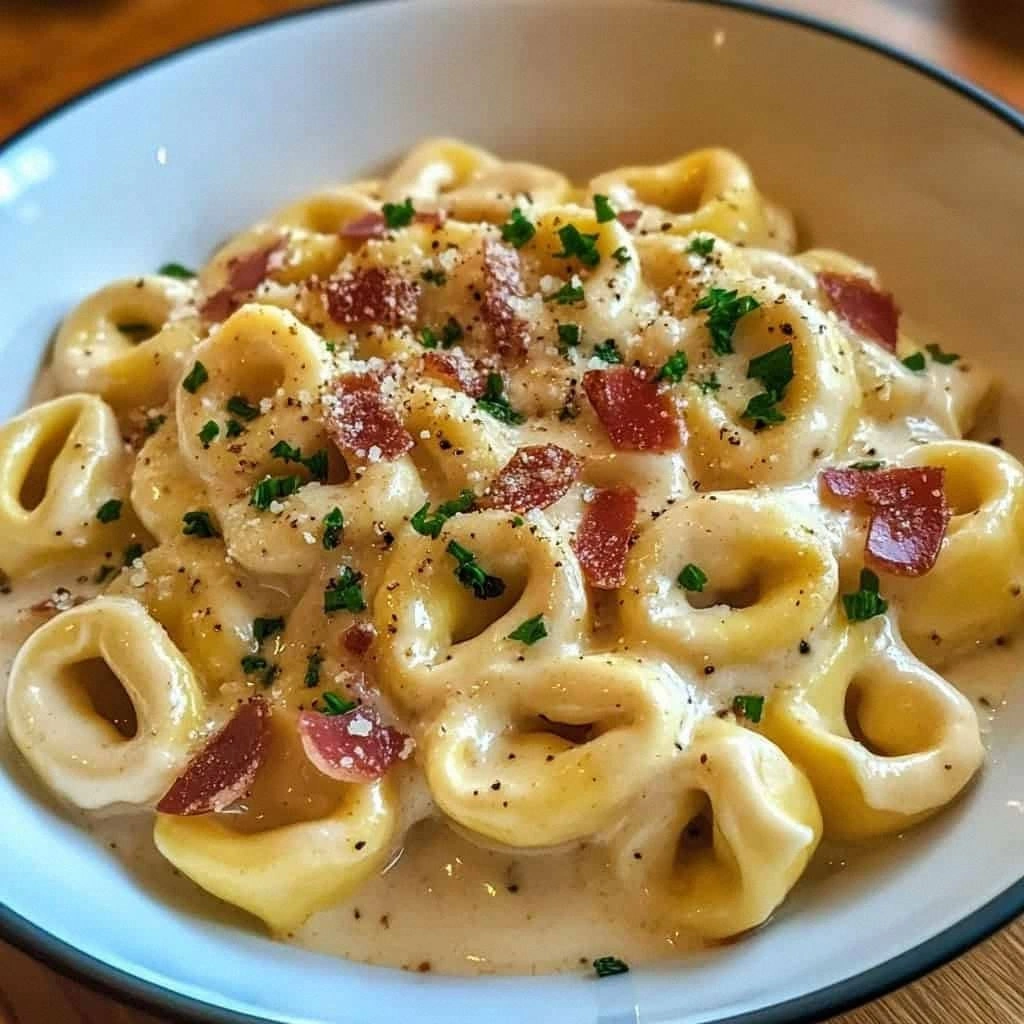
Picture this: it's 11:47 p.m. on a Tuesday, you're standing in your kitchen wearing mismatched socks, and you've just demolished half a pan of what might be the most incredible carbonara-adjacent creation known to humankind. The fork is still in your hand, there's Pecorino Romano dust in your hair, and you're questioning every life choice that led you to this moment of pure, unadulterated bliss. That was me, three weeks ago, when I accidentally stumbled upon what I'm now calling the holy grail of pasta dishes — Tortellini Carbonara, a gloriously twisted love child that marries the delicate pillows of stuffed pasta with the silky, peppery magic of Rome's most famous sauce.
I've made traditional carbonara more times than I care to count, always chasing that perfect emulsion where eggs transform into liquid gold without scrambling, where guanciale renders into crispy little nuggets of porky perfection. But last month, in a moment of what I thought was sheer desperation (empty fridge, late night, growling stomach), I grabbed a package of cheese tortellini instead of the usual spaghetti, and everything I thought I knew about Italian cooking got flipped on its head. The tortellini, those little stuffed rings of joy, became tiny boats carrying pockets of molten cheese through rivers of glossy carbonara sauce, creating a textural symphony that made my taste buds stand up and applaud.
Here's the thing — this isn't just carbonara with a different noodle. This is a complete reimagining of what happens when you let tradition meet innovation in a hot pan with plenty of black pepper. Each tortellini becomes a surprise package, a burst of cheese that mingles with the eggy sauce in ways that'll make you wonder why we ever settled for plain pasta in the first place. The ridges and folds of the tortellini catch more sauce than spaghetti ever could, ensuring every single bite is a perfect balance of creamy, salty, porky, and peppery.
I'm about to share the recipe that made me eat standing up at my kitchen counter at midnight, the one that had me texting friends at inappropriate hours demanding they try it immediately, the one that might just ruin regular carbonara for you forever. Fair warning — once you taste this, there's no going back to the basic version. Your dinner guests will become significantly more enthusiastic about invitations, your significant other might propose marriage (again), and you'll find yourself making excuses to celebrate mundane occasions just so you have an excuse to whip up another batch. Let me walk you through every single step — by the end, you'll wonder how you ever made it any other way.
What Makes This Version Stand Out
The Texture Revolution: Traditional carbonara relies on spaghetti's smooth surface, but tortellini's nooks and crannies create an entirely different experience. Each stuffed pasta ring becomes a miniature flavor bomb, catching pools of silky sauce in its folds while maintaining that perfect al dente bite. The contrast between the tender pasta exterior and the creamy cheese filling creates a textural symphony that'll make you rethink everything you thought you knew about pasta dishes.
The Flavor Amplification: Those cheese-filled tortellini aren't just delivery vehicles for sauce — they're active participants in the flavor party. As the hot pasta meets the egg and cheese mixture, the heat causes the cheese inside each tortellini to soften and meld with the carbonara sauce, creating layers upon layers of dairy complexity that plain pasta simply cannot achieve.
The Foolproof Factor: Here's a dirty little secret — tortellini are actually more forgiving than spaghetti when it comes to carbonara. The starch content in fresh tortellini helps stabilize the emulsion, making it significantly harder to scramble your eggs. If you've ever battled with split carbonara sauce, this version will feel like discovering sliced bread for the first time.
The Crowd-Pleasing Element: I dare you to serve this at a dinner party and watch what happens. Within minutes, conversations pause mid-sentence, forks hover in the air, and someone inevitably asks, "What exactly am I eating?" It's carbonara, but elevated to rockstar status — familiar enough to be comforting, but different enough to be memorable.
The Restaurant-Quality Results: Most home cooks struggle to achieve that glossy, restaurant-quality carbonara because spaghetti can be finicky. Tortellini's structure naturally creates a more stable sauce that clings perfectly without becoming gloopy. You'll look like you trained under a Roman nonna, even if your previous carbonara attempts resembled scrambled egg pasta.
The Make-Ahead Magic: Unlike traditional carbonara that must be served immediately, this version holds surprisingly well. The tortellini's filling helps insulate the sauce, giving you a 15-20 minute window where everything stays perfect. That means less stress when you're juggling multiple dishes or waiting for late guests.
Alright, let's break down exactly what goes into this masterpiece...
Inside the Ingredient List
The Flavor Base
Pancetta or guanciale forms the soul of this dish, rendering into crispy jewels of porky goodness that'll make your kitchen smell like an Italian grandmother's dreams. Guanciale, that cured pork jowl that's been the backbone of authentic carbonara for centuries, brings an almost wine-like complexity with its delicate fat that melts at body temperature. Pancetta, while more readily available, offers a slightly cleaner pork flavor that lets the tortellini's cheese filling shine through more prominently. Four ounces might seem like a modest amount, but trust me — when those little cubes sizzle and shrink, they concentrate into flavor bombs that'll make you question why you ever thought bacon belonged in carbonara.
The Texture Crew
Fresh tortellini are the unsung heroes here, those plump little pockets of joy that transform this from mere pasta dish into an experience. Cheese-filled varieties create the most harmonious marriage with the carbonara sauce, as the ricotta and Parmesan inside each tortellini echo the flavors in the sauce itself. Meat-filled tortellini work too, adding an extra layer of savoriness that turns this into a heartier, more substantial meal. The key is using fresh, not dried — fresh tortellini have a tender bite and starch content that helps thicken the sauce naturally, creating that coveted silky texture without any flour or cream.
The Unexpected Star
Eggs are where the real magic happens, transforming from simple breakfast staple into liquid gold that coats each tortellini in a glossy sheen. Two large eggs provide just enough protein to create a stable emulsion without overwhelming the delicate balance of flavors. The trick lies in using room temperature eggs — cold eggs from the fridge will shock the hot pasta and scramble faster than you can say "mamma mia." Let them sit on the counter for 30 minutes before cooking, or if you're impatient like me, submerge them in warm water for 5 minutes.
The Final Flourish
Pecorino Romano brings that sharp, salty bite that cuts through the richness like a culinary lightsaber, aged to perfection and grated fresh for maximum impact. One cup might seem excessive, but remember — we're not just flavoring the sauce, we're creating a cheese-forward experience that would make a Roman shepherd weep with joy. Freshly ground black pepper isn't just a seasoning here; it's an essential component that adds heat, complexity, and that signature carbonara bite. Grind it coarsely so you get little pops of peppery heat throughout, rather than the dusty flavor of pre-ground pepper that tastes like disappointment and lost dreams.
Everything's prepped? Good. Let's get into the real action...
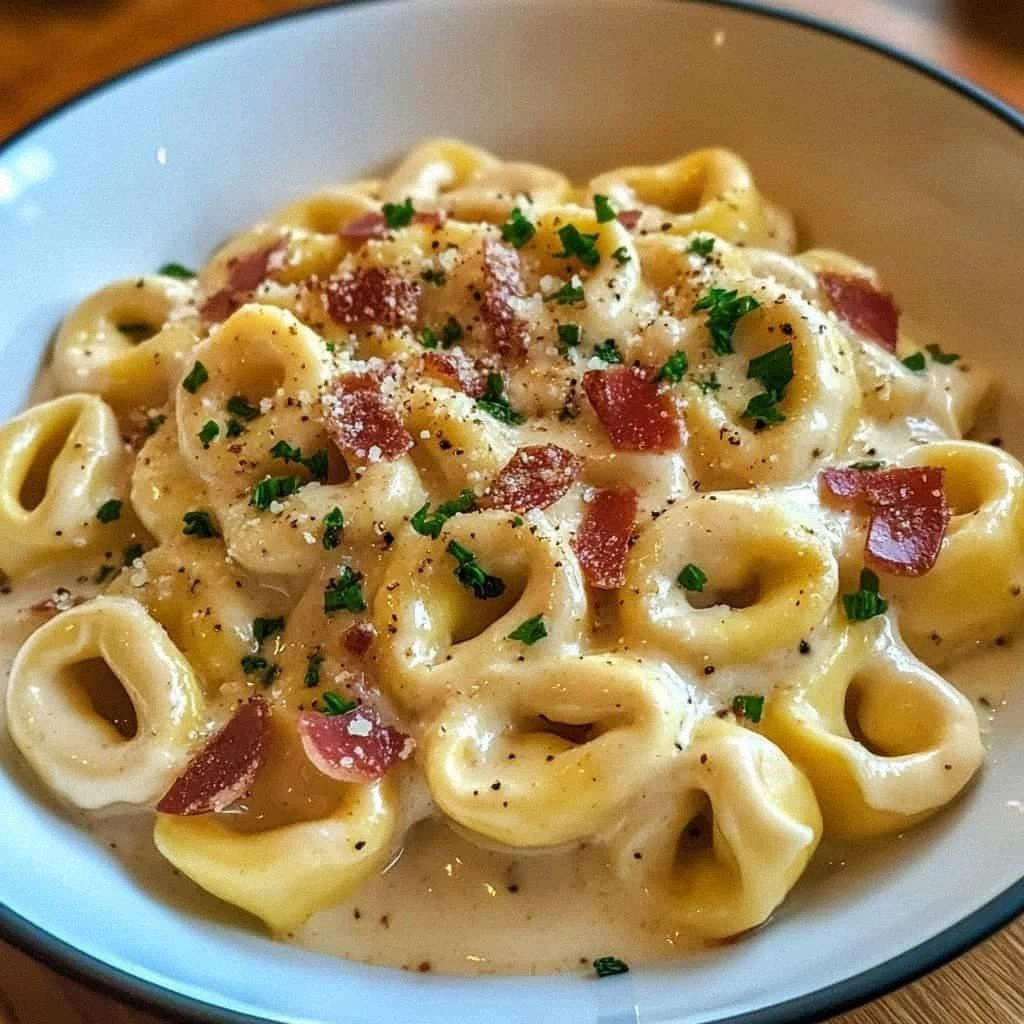
The Method — Step by Step
- Start by cutting your pancetta or guanciale into small, even cubes — think the size of a pea, not a dice. This isn't just about aesthetics; uniform pieces ensure everything renders at the same rate, creating a mix of crispy edges and tender centers that'll make you weak in the knees. Place your heavy-bottomed pan over medium heat and add the pork, listening for that first gentle sizzle that sounds like Italian angels singing. Don't add oil — the fat from the pork will render out and create its own cooking medium, plus that rendered fat is liquid gold that'll flavor everything else.
- While the pork works its magic, bring a large pot of well-salted water to a rolling boil. I'm talking ocean-level salty here — the water should taste like a day at the beach. Add your tortellini and cook for exactly two minutes less than package directions. They'll finish cooking in the sauce later, and trust me, nobody wants mushy tortellini in their carbonara. Reserve at least one cup of that starchy pasta water before draining — this isn't just cooking liquid, it's the secret ingredient that'll help your sauce achieve that restaurant-quality silkiness.
- In a medium bowl, whisk together your room temperature eggs and grated Pecorino Romano until it forms a thick, pale yellow paste. This is where most people mess up carbonara — they add the cheese later, but incorporating it now helps stabilize the emulsion and prevents scrambling. Add a generous amount of freshly ground black pepper, more than you think you need, because the heat will mellow it significantly. The mixture should be thick enough to coat a spoon but still pourable; if it's too thick, thin it with a tablespoon of the reserved pasta water.
- Check your pancetta or guanciale — it should be golden brown and crispy around the edges, with the fat fully rendered and the kitchen smelling like you died and went to Italian heaven. Lower the heat to its absolute minimum setting. This is crucial — too hot and you'll scramble your eggs in the next step. The pork should sizzle gently, not aggressively pop and spit. If your pan is too hot, remove it from heat entirely for 30 seconds to cool down.
- Add the minced garlic to the pan and let it cook for just 30 seconds, until fragrant but not browned. Garlic burns faster than your ex's new relationship, so keep a close eye. The goal is to infuse the pork fat with garlic flavor without adding any bitter, burnt notes. If you see the garlic starting to color, immediately remove the pan from heat — better safe than sorry with this step.
- Drain your tortellini and immediately add them to the pan with the pork and garlic. Toss everything together so each tortellini gets coated in that glorious pork fat. This step isn't just about flavor — coating the pasta in fat helps prevent the egg mixture from seizing when it hits the hot tortellini. Make sure everything is well combined before moving to the next step, because once you add the eggs, there's no going back.
- Remove the pan from heat entirely — I cannot stress this enough. The residual heat from the tortellini and pan will cook the eggs gently, creating that silky sauce without scrambling. Pour the egg and cheese mixture over the tortellini, using tongs or a spatula to toss everything together. Work quickly but gently, ensuring every tortellini gets coated in the glossy sauce. If it seems too thick, add the reserved pasta water a tablespoon at a time until you achieve the consistency of heavy cream.
- Keep tossing for about 30 seconds to a minute, until the sauce transforms into a glossy coating that clings lovingly to each tortellini. The sauce should coat the back of a spoon but still be pourable — think the consistency of a really good Alfredo, but lighter and more elegant. If you see any signs of scrambling, immediately stop tossing and add a splash of the reserved pasta water, which will help bring everything back together. Season with salt and plenty more black pepper, remembering that the cheese and pork are already salty.
That's it — you did it. But hold on, I've got a few more tricks that'll take this to another level...
Insider Tricks for Flawless Results
The Temperature Rule Nobody Follows
Room temperature ingredients aren't just a suggestion — they're the difference between carbonara success and a scrambled egg disaster. Take your eggs, cheese, and even your tortellini (if refrigerated) out of the fridge 30 minutes before cooking. Cold eggs hitting hot pasta creates thermal shock, causing the proteins to seize and scramble faster than you can say "allora." If you're impatient (and let's face it, we all are when hungry), submerge your eggs in warm water for 5-10 minutes, and give your cheese a quick 10-second zap in the microwave. Your future self will thank you when you're serving up restaurant-quality carbonara instead of something that looks like breakfast gone wrong.
Why Your Nose Knows Best
That rendered pork fat should smell like heaven — nutty, porky, and slightly sweet. If it starts to smell acrid or burnt, you've gone too far and your entire dish will taste bitter. The key is medium-low heat and patience — good things come to those who wait, and perfect guanciale comes to those who don't walk away from the stove. Listen for the sound change too — it goes from a wet sizzle to a dry crackle when the water has evaporated and the real rendering begins. That's your cue to start paying attention, because in the next 2-3 minutes, it'll go from perfect to burnt faster than you can check Instagram.
The 5-Minute Rest That Changes Everything
After you've achieved that glossy sauce perfection, resist the urge to immediately plate and serve. Let the pan sit off heat for exactly 5 minutes — set a timer, because this is crucial. During this rest, the sauce thickens slightly as it cools, the flavors meld together like old friends reuniting, and the tortellini absorbs just enough sauce to become infused with carbonara magic. This isn't just dinner — it's dinner with benefits, the kind that makes people close their eyes and make embarrassing noises when they take the first bite. A friend tried skipping this step once — let's just say it didn't end well, and she missed out on the full experience that makes this dish legendary.
Creative Twists and Variations
This recipe is a playground. Here are some of my favorite ways to switch things up:
The Smoky Bacon Revolution
For those times when guanciale is harder to find than a parking spot at the mall during Christmas, thick-cut smoked bacon makes a surprisingly delicious substitute. The smoke adds a whole new dimension that, while not traditional, creates a bacon-and-egg carbonara that's downright addictive. Use the same amount, but cook it a bit longer to achieve crispy edges that'll shatter like thin ice. The smoky flavor pairs beautifully with cheese tortellini, creating a brunch-worthy version that'll have you dreaming of lazy Sunday mornings.
The Spring Vegetable Fling
Add a handful of fresh or frozen peas during the last minute of cooking for pops of sweetness that cut through the richness like a knife through butter. The peas nestle into the tortellini's folds, creating little bursts of springtime that make this dish feel somehow lighter and more virtuous. Asparagus tips work beautifully too — just blanch them for 30 seconds before adding to maintain their vibrant color and slight crunch. It's like giving your carbonara a seasonal wardrobe change.
The Truffle Shuffle
A few drops of white truffle oil stirred in at the very end transforms this into a restaurant-worthy special occasion dish. Use sparingly — truffle oil is like perfume, a little goes a long way and too much makes you smell like you're trying too hard. The earthy aroma marries beautifully with the cheese tortellini, creating an umami bomb that'll have your dinner guests convinced you trained in Italy. Just remember, real truffle oil (made with actual truffles) is expensive, but the supermarket stuff works fine for everyday indulgence.
The Spicy Affair
Add a pinch of red pepper flakes when cooking the pork for a version that'll warm you from the inside out. The heat builds slowly, complementing rather than overwhelming the dish's inherent richness. For true heat seekers, swap in spicy Italian sausage (casings removed) for half the pork — the fennel seeds in the sausage add an herby note that plays beautifully with the cheese filling. It's carbonara with a bad attitude, perfect for those nights when you need comfort food with a kick.
The Green Goddess
Stir in a handful of fresh baby spinach during the final tossing stage — the residual heat wilts it perfectly without making the dish watery. The spinach adds color, nutrients, and a fresh flavor that makes this feel almost healthy (almost). For an extra punch, add some fresh basil chiffonade right before serving. The herbal notes create a bridge between the pork and cheese flavors, making each bite more complex and interesting than the last.
The Surf and Turf
For a special occasion, add some seared scallops on top — the sweetness of perfectly cooked scallops creates an incredible contrast with the salty, porky carbonara. Sear them in a separate pan while the tortellini cooks, then place them on top just before serving. It's like taking your taste buds on a luxury vacation without leaving your kitchen. Just make sure not to overcook them — rubbery scallops are sadder than a missed flight to Rome.
The Breakfast of Champions
Top each serving with a perfectly poached egg for the ultimate indulgence — when you break the yolk, it mingles with the existing sauce to create something so decadent it should probably be illegal. This is weekend brunch goals, the kind of dish that makes people cancel plans just to stay home and eat. Serve it with strong coffee and prepare for a food coma that'll have you napping like an Italian nonna after Sunday lunch.
Storing and Bringing It Back to Life
Fridge Storage
Leftover tortellini carbonara will keep for up to 3 days in an airtight container in the refrigerator, though honestly, I've never had it last more than 24 hours in my house. The sauce will thicken considerably as it cools, transforming into something that resembles mac and cheese more than silky carbonara. Don't panic — this is normal and totally fixable. Store it in the shallowest container you have, which helps it cool faster and prevents bacteria growth. Press plastic wrap directly onto the surface to prevent a skin from forming, because nobody wants to deal with rubbery pasta film when they're already dealing with leftover disappointment.
Freezer Friendly
Here's where things get controversial — you can technically freeze this dish, but you shouldn't expect it to be the same glorious experience as fresh. The egg sauce will separate and become grainy, though the flavor remains intact. If you must freeze it, do so in individual portions in freezer bags with as much air removed as possible. Thaw overnight in the refrigerator, then proceed with the reheating method below. It won't be restaurant-quality, but it's better than starving on a busy Tuesday night when you can't be bothered to cook.
Best Reheating Method
The microwave is your enemy here — it'll turn your beautiful carbonara into a rubbery, separated mess that'll make you question your life choices. Instead, add your leftovers to a cold pan with a splash of water or milk, then heat gently over low heat while stirring constantly. The key is patience and low temperature — you're essentially recreating the emulsion process. Add a tiny splash of water before reheating — it steams back to perfection, loosening the sauce without making it watery. Finish with fresh Pecorino and black pepper to brighten everything up, and you'll have something that, while not quite as good as fresh, is still miles better than most restaurant carbonara.